The Tip Is Not the Problem. The System Built Around It Is.

The tipping debate in hospitality is not new. What is new is the convergence of pressures making it impossible to ignore: consumer fatigue is documented, worker income instability is measurable, and the legislative landscape is shifting faster than most operators have prepared for.
The tipping system in American hospitality was built around a specific behavioral assumption: that guests, given discretion over how much service workers earn, would reliably compensate at a level that makes those jobs sustainable. For decades, that assumption held well enough that the industry built its entire compensation architecture around it. The federal tipped minimum wage has sat at $2.13 per hour since 1991. The model works when tips are generous, consistent, and distributed fairly. The evidence from 2024 and 2025 suggests that all three of those conditions are under increasing strain.
90% of Americans now believe tipping culture has become excessive, according to Restroworks' 2025 analysis. Average tips at full-service restaurants dropped to 19.4% in Q3 2024, down from a pandemic high and continuing a trend that reflects both consumer fatigue and the expansion of tip prompts into contexts, quick-service counters, self-checkout kiosks, and digital ordering platforms, where guests feel the request is disconnected from the service. The share of full-service guests who choose to tip at all has dropped from 73% in 2022 to approximately 65% in recent data. That is not a rounding error. That is a structural shift in the behavior the entire compensation model depends on.
On the worker side, the picture is equally complicated. 58.5% of a server's and 54% of a bartender's hourly earnings still come from tips, making income both significant and volatile. Base pay is rising, with the average full-service worker now earning $23.88 per hour total in 2024, but base wages now account for only 43% of that figure, meaning the majority of take-home income remains dependent on nightly variability. The back-of-house worker, the cook, the prep team, and the dish washer, earns a flat hourly wage with no access to tip income at all, creating a structural pay gap between the front and back of house that affects team cohesion, retention, and the overall stability of the operation. 54% of hourly hospitality workers plan to leave their current employer within 12 months. Income instability is consistently cited as a primary driver.
What this means for operators
The tipping model is not broken everywhere. But pretending it is not under pressure is a business risk.
The operator position on tipping is genuinely complicated, and the complexity deserves more honest engagement than most industry conversations provide. The traditional model has real advantages: it keeps base labor costs lower, aligns worker income with performance incentives, and is familiar to both staff and guests. 63% of restaurants made no changes to their tipping models in 2024, reflecting both the operational inertia around change and the legitimate concern that moving away from tips too quickly, or in the wrong context, can backfire with staff who prefer the earning potential of a tip-based system.
But the data on what tip dependence is costing in retention is harder to dismiss. Low wages and inconsistent income are among the most documented drivers of hospitality turnover, and tip-dependent earnings are consistently identified as a source of financial stress and job instability for hourly workers. The cost of replacing a single hourly employee runs between $2,300 and $5,800. An operation cycling through staff because income volatility drives exits is paying for that volatility in replacement costs that never appear on the same ledger as the labor savings from a low base wage. The accounting is disconnected. The cash is real.
The legislative direction is also worth tracking closely. Thirteen states have active campaigns to end subminimum tipped wages. Chicago began phasing out tip credit in July 2024, requiring full minimum wage regardless of tip income. California, Oregon, and Washington already pay full minimum wage before tips. The operators in those markets have been navigating the transition for long enough that their experience is instructive: the sky does not fall, but the menu pricing, communication strategy, and compensation structure all require deliberate redesign. The operators who wait for legislation to force the change consistently do it under more pressure than those who build toward it intentionally.

What operators should do
Audit your current compensation model against your actual turnover cost data before deciding whether to change it
The decision to maintain, modify, or replace a tipping model should be grounded in what the current model is actually costing the business, not just what it saves on base wage. An operator who calculates the annual cost of tip-driven turnover, including replacement, training, and service inconsistency, against the cost of a higher base wage model often finds the numbers closer than assumed.
An operator with 20 front-of-house staff running 70% annual turnover is replacing 14 people per year at an average cost of $3,500 each, totaling $49,000 in replacement costs annually. A base wage increase that reduces turnover to 30% saves the business $28,000 per year before accounting for the improvement in service consistency and guest experience. The labor saving from the lower base wage is not free. It is being paid elsewhere.
If you implement a service charge or tip-included model, communicate the change explicitly and early
The operators who have successfully transitioned to service-included or hospitality-included pricing share one consistent practice: they over-communicate the change to guests before, during, and after it happens. Guests who understand that the price increase funds fair wages for the full team respond differently from guests who notice a higher bill without explanation. The communication is not a courtesy. It is a conversion strategy.
A restaurant that adds a 20% service charge and includes a one-line note on the menu explaining that it funds full wages for the entire team, kitchen included, gives the guest a reason to accept the change rather than a reason to resist it. The guests who care about fair compensation for hospitality workers, a growing and vocal segment, become advocates rather than objectors.
Evaluate tip pooling as a retention tool for back-of-house staff before considering a full model change
The 2018 FLSA amendment allows operators who pay full minimum wage without a tip credit to include back-of-house staff in tip pools. This creates a pathway to more equitable income distribution without requiring a full transition to service-included pricing. It addresses the front-to-back pay gap that is one of the most consistent drivers of kitchen turnover without requiring menu repricing or full compensation restructuring.
An operator who introduces a tip pool that distributes 20% of server tips to kitchen staff sees measurable improvement in back-of-house morale, retention, and the quality of collaboration between front and back teams. The servers earn slightly less per shift. The kitchen earns meaningfully more. The net effect on team stability and service quality typically outweighs the marginal individual reduction for tipped staff.
Track the "No Tax on Tips" legislative development and model its impact on your compensation strategy
The House passed a budget resolution in February 2025 that moves the no-tax-on-tips proposal forward, though it has not yet become law. If enacted, tipped employees would keep more of their earnings without any change to employer payroll obligations. For operators in markets where retaining tipped staff is a significant challenge, this development could improve the competitiveness of tip-based compensation without any additional cost to the business.
A high-earning server currently paying federal income tax on tip income could retain an additional $1,700 or more annually if the proposal becomes law. For an operator recruiting in a competitive labor market, that retention improvement arrives at zero employer cost, but only for operations that have stayed current on the legislative landscape and communicated the benefit to their teams.
Design your compensation model around the specific segment and market you operate in, not the industry average
There is no universal answer to the tipping question because there is no universal hospitality operation. A fine dining restaurant where experienced servers earn $80,000 annually in tips has a different conversation from a fast-casual counter where tip fatigue is reducing a nominal income supplement to near zero. The right compensation model is the one that matches the earning expectations of the staff you need to retain in the market you operate in, communicated clearly to the guests who are funding it.
A neighborhood wine bar that transitions to a 20% included service charge, raises kitchen wages to $22 per hour, and communicates the change through menu language and staff training may lose a small percentage of price-sensitive guests and gain a more stable, better-retained team that delivers more consistent service. Whether that trade-off works depends on the specific guest mix, price tolerance, and competitive landscape of that market. There is no version of this decision that does not require that analysis.
What this means for consumers
Your tip is part of a compensation system. Understanding how it works changes how you use it.
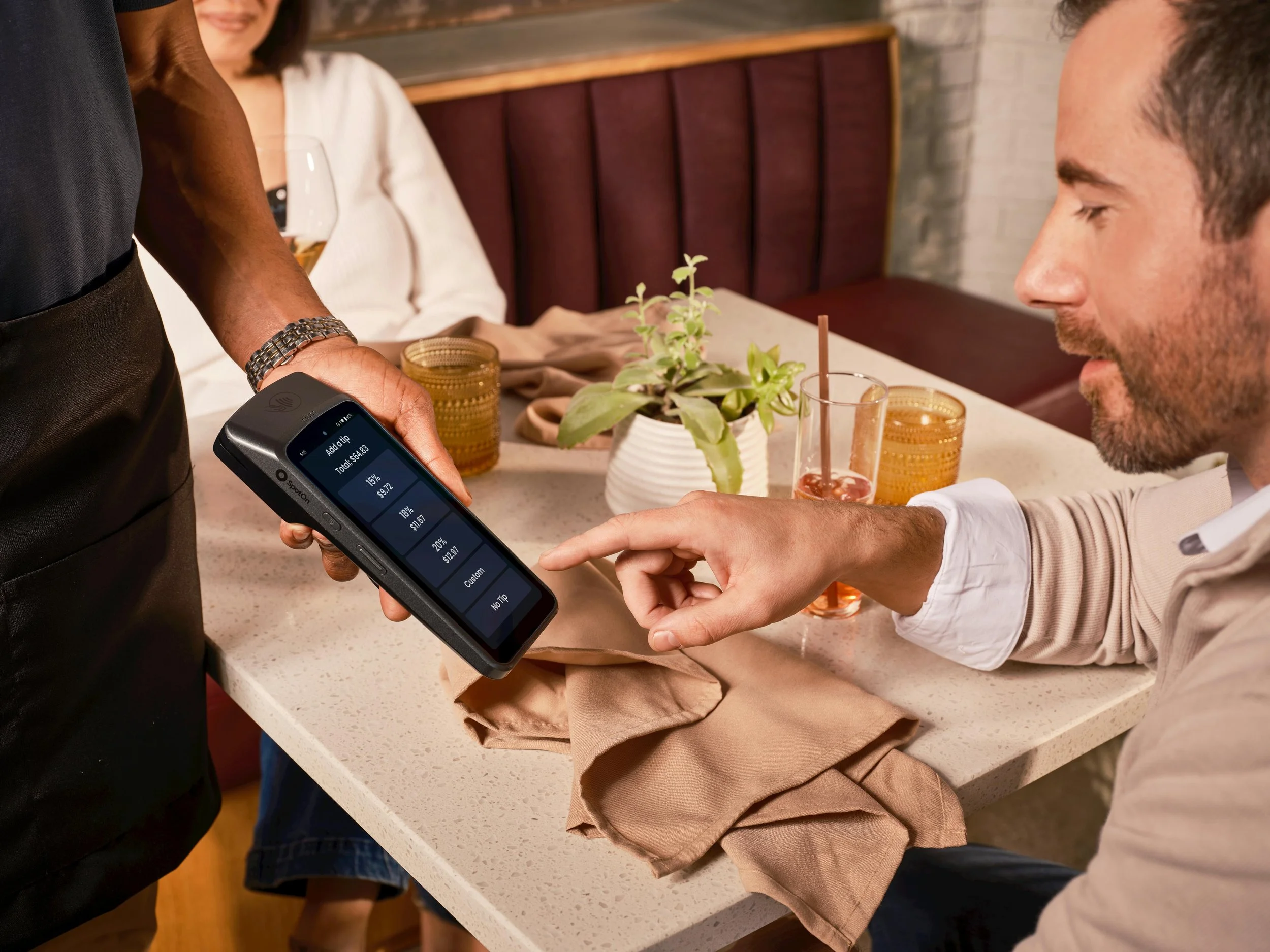
Consumer frustration with tipping is real, well-documented, and in many cases entirely reasonable. The expansion of tip prompts into self-service contexts has stretched the social contract of tipping well beyond its original logic, and nearly nine in ten Americans feel tipping culture has spiraled out of control. That frustration, when it is directed at the tip prompt on a self-checkout screen or a kiosk where no service was provided, is proportionate. When it translates into reduced tipping at full-service restaurants where staff are still earning the majority of their income from gratuity, it lands differently. The two contexts are not the same, and treating them as equivalent has real consequences for real workers.
58.5% of a server's hourly earnings and 54% of a bartender's come from tips. The federal tipped minimum wage remains $2.13 per hour in states that have not legislated above it. A guest who reduces their tip from 20% to 15% because they are tired of being asked to tip everywhere is making a decision that feels like a small act of resistance to an overextended system. For the server who served them for two hours, it is a measurable reduction in income for work that was identical to the night before. The frustration is understandable. The target is often wrong.
The more productive direction for consumer energy in this debate is not toward reducing tips at full-service restaurants but toward supporting the operators who are actively trying to build more equitable compensation models. Service-included restaurants, hospitality-charge models, and operations that communicate clearly about how their compensation works and why are offering guests a more transparent relationship with the economics of hospitality. About 16% of Americans say they would prefer restaurants to raise menu prices and remove tipping altogether. That preference, when it is backed by willingness to pay and positive reviews of the places doing it, is the market signal that accelerates the transition.
What consumers can do
Distinguish between tip fatigue from context creep and tip fatigue from full-service dining
The frustration of being prompted to tip at a self-checkout or a counter where no table service was provided is a legitimate response to tip creep. Reducing tips at full-service restaurants because of that frustration is directing the response at the wrong target. The two experiences are structurally different, and the workers affected by them are in very different income situations.
A guest who decides to stop tipping at coffee shop kiosks where they ordered and picked up their own drink is responding proportionately to a tip request that does not reflect a service relationship. The same guest who reduces their tip at a sit-down dinner because they are generally tired of being asked to tip is reducing the income of a server whose base wage may be as low as $2.13 per hour. The feeling is the same. The impact is not.
Support and review positively the restaurants making their compensation model transparent
Operators who add a service charge and explain it clearly, who publish their wage structure, or who communicate how their tip pool works are taking on the reputational risk of transparency in a market that does not always reward it. Guests who respond to that transparency with return visits and specific, positive reviews are sending the signal that the investment is worth making.
A restaurant that includes a note on its menu explaining that the 20% service charge funds full wages for the kitchen team and eliminates income volatility for front-of-house staff is doing something most operators will not attempt. A guest who leaves a review naming that transparency specifically is helping the next guest understand what they are paying for and why, which makes the model more viable for every operator considering the same move.
Ask how tip income is distributed when you genuinely want to support the full team
In most traditional tipping models, back-of-house staff receive no share of tip income. A guest who wants their money to reach the kitchen as well as the front of house can ask directly, and the answer tells them something about how the operation thinks about equitable compensation. Many operators with extended tip pools are proud to explain them. The question gives them the opportunity.
A guest who asks their server whether the kitchen team participates in tip sharing at a restaurant they love regularly is not being intrusive. They are signaling that equitable compensation matters to them as a customer. That signal, when it comes from enough guests, influences how operators think about their compensation structure the next time the conversation comes up internally.
Tip on the pre-tax total and tip in cash when you can
Tipping on the post-tax total, a default on most digital payment screens, means the guest is effectively tipping on the government's share of the bill. Tipping on the pre-tax subtotal is the accurate base. Cash tips are also preferable from the worker's perspective: they are immediate, certain, and in states where tip credit applies, not subject to the administrative complexity of digital distribution systems.
On a $100 pre-tax bill with $10 in tax, a 20% tip on the pre-tax total is $20. A 20% tip on the post-tax total is $22. Neither is wrong, but understanding the difference gives the guest full control over their decision rather than defaulting to whatever the payment terminal suggests, which is almost always calculated on the total including tax and often defaults to a suggested percentage starting at 20%.
The tipping debate does not have a single right answer. It has a set of decisions that every operator needs to make deliberately, based on their specific market, their team's earning expectations, and the guest relationship they are trying to build. The operators navigating this transition well are not the ones reacting to legislation or guest complaints. They are the ones who have modeled the economics, designed the communication strategy, and built the compensation infrastructure that works for their specific operation. HoCo works with operators to build that infrastructure, whether the decision is to refine the existing model, expand tip pooling, or transition to service-included pricing that holds up to scrutiny from both the team and the guest.
Sources
1. Restroworks — Restaurant Tipping Statistics: Data and Trends 2025
2. Toast — The Great Tipping Debate: How Restaurants Are Navigating America's Evolving Gratuity Landscape
3. Gratuity Solutions — Restaurant Tip-Out Chart 2026: Percentages, Standards and Compliance Rules
4. 7shifts — Restaurant Workforce Report 2025
5. Paytronix — Restaurant Staff Turnover: Causes and Retention Strategies 2025
6. OysterLink — Latest Tipping Culture Statistics and Trends 2025
7. GoFoodservice — Restaurant Tipping Guide: What Operators Need to Know, 2026