Menus as marketing tools, not just price lists
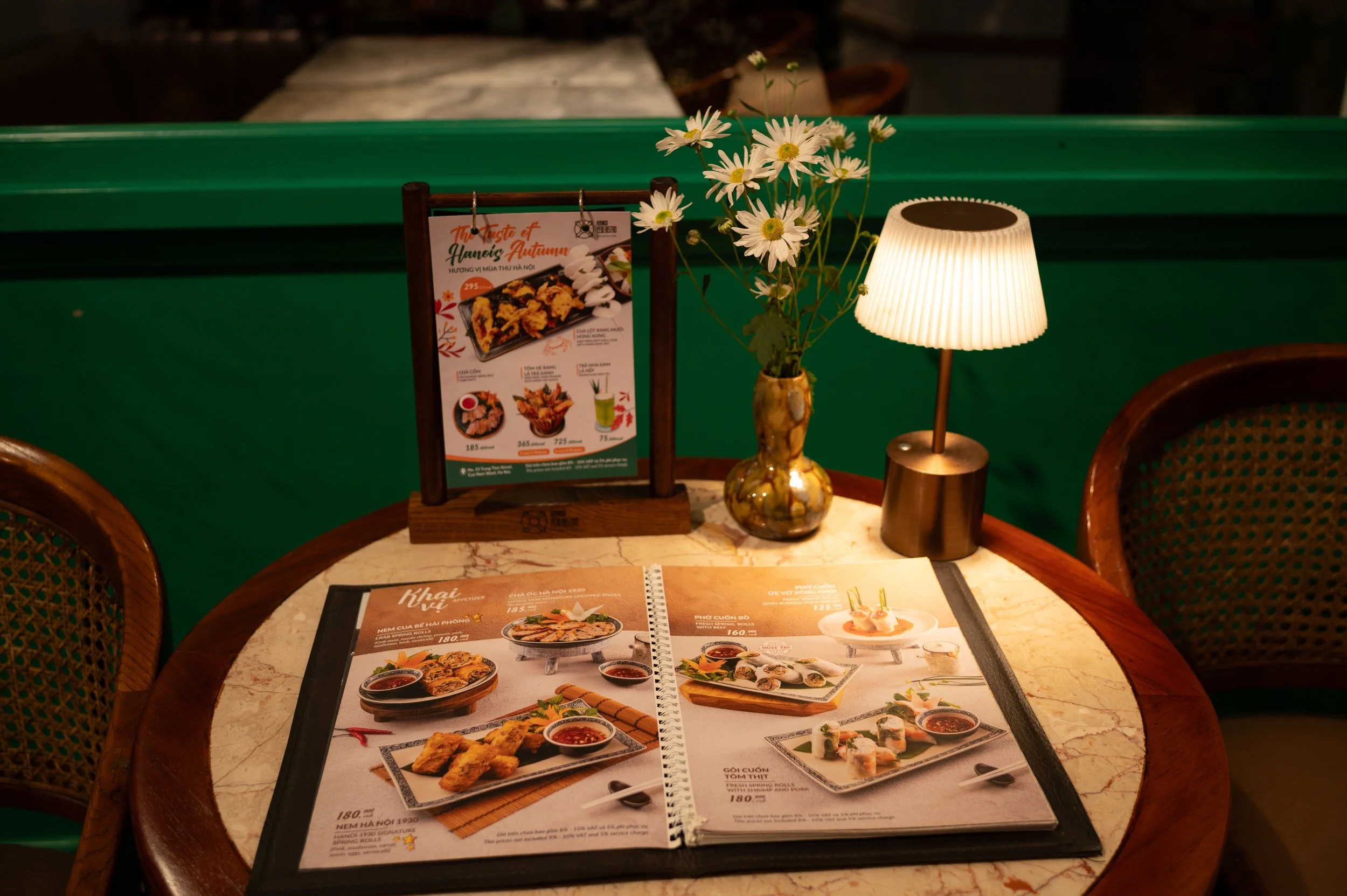
Most operators spend more time engineering their kitchen than their menu. That is a significant oversight given that the menu is the only piece of communication every single guest reads before spending money in your business.
The average guest spends 109 seconds reading a menu. That is the entire window an operator has to shape what a guest perceives, what they order, and how much they spend. In under two minutes, the menu is doing the work of a sales team, a brand strategist, and a pricing consultant simultaneously. The operators who treat it as a functional document, dishes, descriptions, prices, are leaving most of that work undone. The ones who treat it as a behavioral tool are engineering outcomes their competitors attribute to luck or location.
Menu engineering is not a new discipline. Cornell University's Center for Hospitality Research has been producing foundational work on it for decades. What is new is how much of that research remains unused in the average independent restaurant. Descriptive menu language increases sales of those items by up to 27%, according to Cornell research cited by Toast, and also increases the likelihood that guests will reorder those items on return visits. That is a check average and a retention lever in the same sentence. And yet most menus still read like inventory lists, naming what something is without communicating why it is worth ordering.
The structural pressure on operators makes this more urgent, not less. Full-service restaurant menu prices have risen 4.0% year-over-year as of mid-2025, and 91% of diners have noticed menu price increases. Guests are more price-conscious and more intentional about where they spend. In that environment, the menu's job is not just to list options. It is to communicate value convincingly enough that the price feels justified before the food arrives. The operators who understand this distinction are not just filling seats. They are shaping perception, and perception drives spend.
What this means for operators
Every menu decision is a revenue decision. Most operators are not making them deliberately.
Menu engineering works on a principle that is straightforward once articulated: guests do not evaluate prices in absolute terms. They evaluate them relative to what surrounds them. A $55 entrée feels expensive in isolation. It feels reasonable next to a $95 tasting option. The $95 item does not need to sell. It needs to exist. This is price anchoring, and it is one of the most documented and least applied tools in the independent restaurant operator's toolkit. The same logic applies to item placement, description language, visual hierarchy, and price formatting. Every element of the menu is shaping the guest's frame of reference before they make a single decision.
The data on price formatting alone is striking. A Cornell study published in the International Journal of Hospitality Management found that diners spent an average of 8% more when menus removed dollar signs from price listings. Presenting a price as 28 rather than $28 reduces what researchers call the "pain of paying," the cognitive friction that makes guests hesitate before committing to a higher spend. Across 200 covers a night, an 8% increase in average check is not a rounding error. It is a compounding revenue decision that costs nothing to implement. Most operators have never made it.
Item placement follows equally well-documented patterns. Eye-tracking studies show that guests' eyes move first to the center of a menu, then the top right, then the top left, what menu engineers call the golden triangle. High-margin items placed in those zones are selected more frequently than identical items placed elsewhere. This is not manipulation. It is applied behavioral science, and the operators using it are not tricking their guests. They are meeting them where their attention already goes and making it easier to choose well, for the guest and for the business.
What operators should do
Rewrite every menu description to include at least one sensory or origin detail
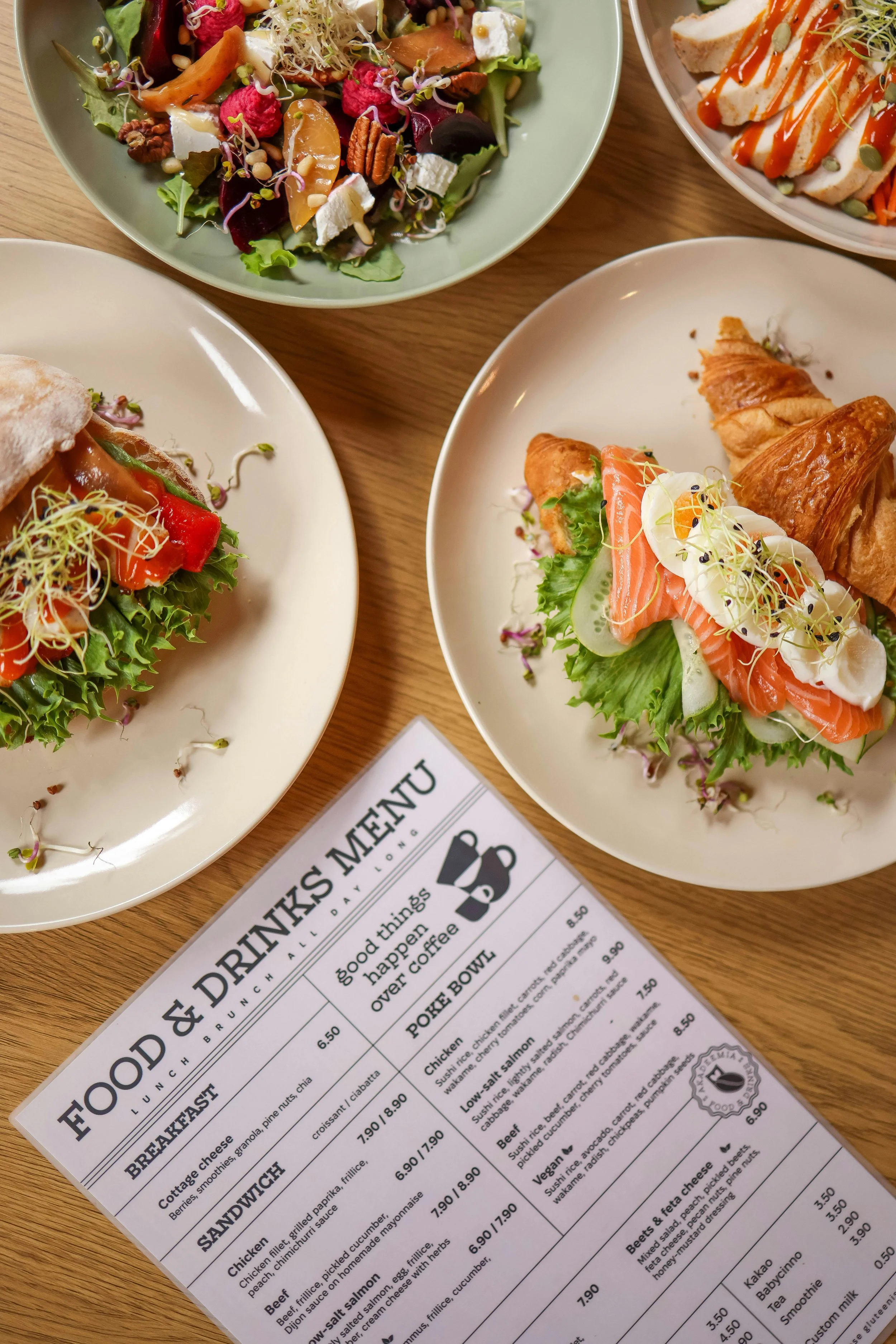
Generic item names communicate what something is. Sensory and origin language communicates why it is worth ordering. The Cornell research is consistent: descriptive language that gives guests a sensory or contextual hook drives a measurable lift in both selection and reorder rates. The description does not need to be lengthy. It needs to be specific.
"Grilled salmon" tells a guest what is on the plate. "Wild-caught Pacific salmon, grilled over applewood and finished with a preserved lemon butter" tells them where it came from, how it was cooked, and how it will taste. That difference in language corresponds directly to a difference in perceived value, and perceived value is what justifies a price point before the plate arrives.
Remove dollar signs from all price listings across your menu
The Cornell finding is among the most replicated in menu psychology research. Removing the currency symbol reduces the cognitive friction associated with spending without obscuring the price itself. The guest still sees the number. They process it differently. The 8% average check increase it produces requires no ingredient cost, no labor, and no operational change.
A full-service restaurant running 150 covers per night at an average check of $65 is generating $9,750 in nightly revenue. An 8% increase in average check through typography alone adds $780 per night. Over a full year at that volume, the formatting change is worth approximately $285,000 in additional revenue. The menu reprint costs a few hundred dollars.
Place your highest-margin items in the golden triangle and remove price columns
The golden triangle, center, top right, top left, is where guest attention lands first. High-margin items positioned there are selected more frequently with no change to the item itself. Price columns, where all prices are aligned on the right side of the page, train the eye to scan costs rather than descriptions. Breaking the column format and embedding prices into descriptions redirects attention from cost comparison to item appeal.
A restaurant that moves its highest-margin pasta dish from the bottom of the entrée section to the top right position and eliminates the price column in favor of embedded pricing will typically see a measurable shift in that item's selection rate within the first two weeks of the new menu. The dish did not change. Its position in the guest's decision-making process did.
Use a price anchor to reframe the perceived value of your target spend range
A single high-priced item, a premium cut, a chef's tasting experience, a large-format bottle, recalibrates the guest's internal price meter so that everything adjacent to it reads as reasonable. The anchor item rarely needs to sell in volume. Its job is to make the items around it feel like good value by comparison, which increases selection of the mid-to-high-margin items the operator actually wants to move.
A bar that adds a $90 aged spirits flight to a cocktail menu where everything else is priced between $18 and $32 is not expecting to sell the flight at high volume. It is making the $28 cocktail feel like a measured choice rather than an indulgence. The guest who might have ordered the $18 option often moves to the $24 or $28 one because the anchor has shifted their frame of reference upward.
Audit your menu quarterly against actual sales and margin data, not just popularity
A menu item that sells frequently but carries a low margin is a cost center dressed as a success. Menu engineering requires knowing not just what sells but what the business earns from what sells. Items in the high-popularity, low-margin category are candidates for price adjustment, portion revision, or ingredient substitution. Items in the high-margin, low-popularity category are candidates for repositioning, description revision, or placement change.
An operator who reviews their menu against a two-by-two matrix of popularity and profitability every quarter will find that two or three items consistently fall into the high-margin, low-visibility category. Rewriting those descriptions and moving them into better placement positions typically produces a measurable selection lift without any change to the item cost structure. The revenue was already available. The menu just was not surfacing it.
What this means for consumers
The menu is designed to guide your decisions. Knowing how it works makes you a better one.
Every element of a well-engineered menu is deciding for the guest before the guest makes one consciously. The item at the top right of the page. The description that ends with a flavor note rather than an ingredient list. The price written as 24 rather than $24.00. These are not accidents. They are design decisions informed by decades of behavioral research, and they work on every guest in the room, regardless of whether those guests know it. Understanding the mechanics does not diminish the experience. It makes guests more intentional participants in it.
The price anchoring dynamic is worth understanding because it shapes perceptions of value in ways that are not always aligned with what the guest actually wants to spend. A 2021 LSE and University of Sussex study examining 6,335 wines across 249 London restaurants found that the highest percentage markups were concentrated not at the cheapest or most expensive end of the list, but in the median range, precisely where guests gravitate when they are trying to appear neither cheap nor extravagant. The instinct to order the second-cheapest wine as a safe middle ground is one of the most predictable behaviors on a wine list, and operators price accordingly. Knowing this does not mean avoiding that zone. It means choosing within it with more awareness of why it feels safe.
Guests who read menus actively rather than reactively also tend to have better dining experiences. A description that names the sourcing origin of an ingredient, specifies a cooking technique, or explains a flavor profile gives the guest enough information to order with confidence rather than defaulting to whatever sounds familiar. 76% of consumers say detailed menu descriptions matter when trying unfamiliar food. The guest who reads those descriptions carefully, rather than scanning for the lowest price or the most recognizable name, is consistently the one who discovers the best dish on the menu and leaves with the strongest impression of the experience.
What consumers can do
Read descriptions before looking at prices
The sequence in which a guest processes menu information shapes what they order. Reading the description first builds a value perception before the price registers, which means the price is evaluated against an established expectation rather than in isolation. Guests who price-scan first tend to anchor at the lower end and then justify upward, which is a less satisfying and less efficient way to make an ordering decision.
A guest who reads "dry-aged beef short rib, braised for 12 hours with black garlic and finished with a bone marrow butter" has formed a value expectation before they see the price. When the price reads 38, that number lands differently than if they had seen 38 first and then read the description, trying to justify whether it is worth it. The order of processing changes the outcome.
Notice the anchor item and use it as a calibration tool, not a comparison point
The most expensive item on a menu is rarely there primarily to sell. It is there to make the items near it feel reasonable. A guest who recognizes this can use the anchor to understand the operator's intended price range rather than letting it unconsciously push their spend upward toward items they did not originally intend to order.
A menu with a $110 dry-aged tomahawk steak is telling the guest that this kitchen operates at a premium level and that the $48 entrée next to it represents accessible fine dining rather than an indulgence. That is useful information. Using it to decide whether the overall price range fits your evening is different from letting the anchor pull your order toward the $65 option when the $38 one is what you actually want.
Ask your server about the items that are described with the most specificity
Operators who invest in descriptive language typically invest equally in training their teams to speak to those dishes. The most specifically described item on a menu is almost always the one the kitchen is most confident in and the one the server can speak to most fluently. Following the specificity is a reliable shortcut to the best dish on the menu.
A menu that describes one item with a sourcing origin, a preparation technique, and a flavor note while everything else reads as a simple ingredient list is signaling which dish the kitchen is most proud of. Asking the server about that dish will almost always confirm it and frequently reveal additional context that makes it the obvious order. The description is the kitchen's pitch. The server is the closer.
Treat the menu as a reflection of how the operation thinks, not just what it sells
A menu that communicates with specificity, confidence, and care reflects an operation that approaches its work the same way. Vague menus, crowded with options and generic descriptions, reflect operations that have not invested in the discipline of editing. The guest who reads a menu as a document rather than a list is getting a preview of the experience before the first dish arrives.
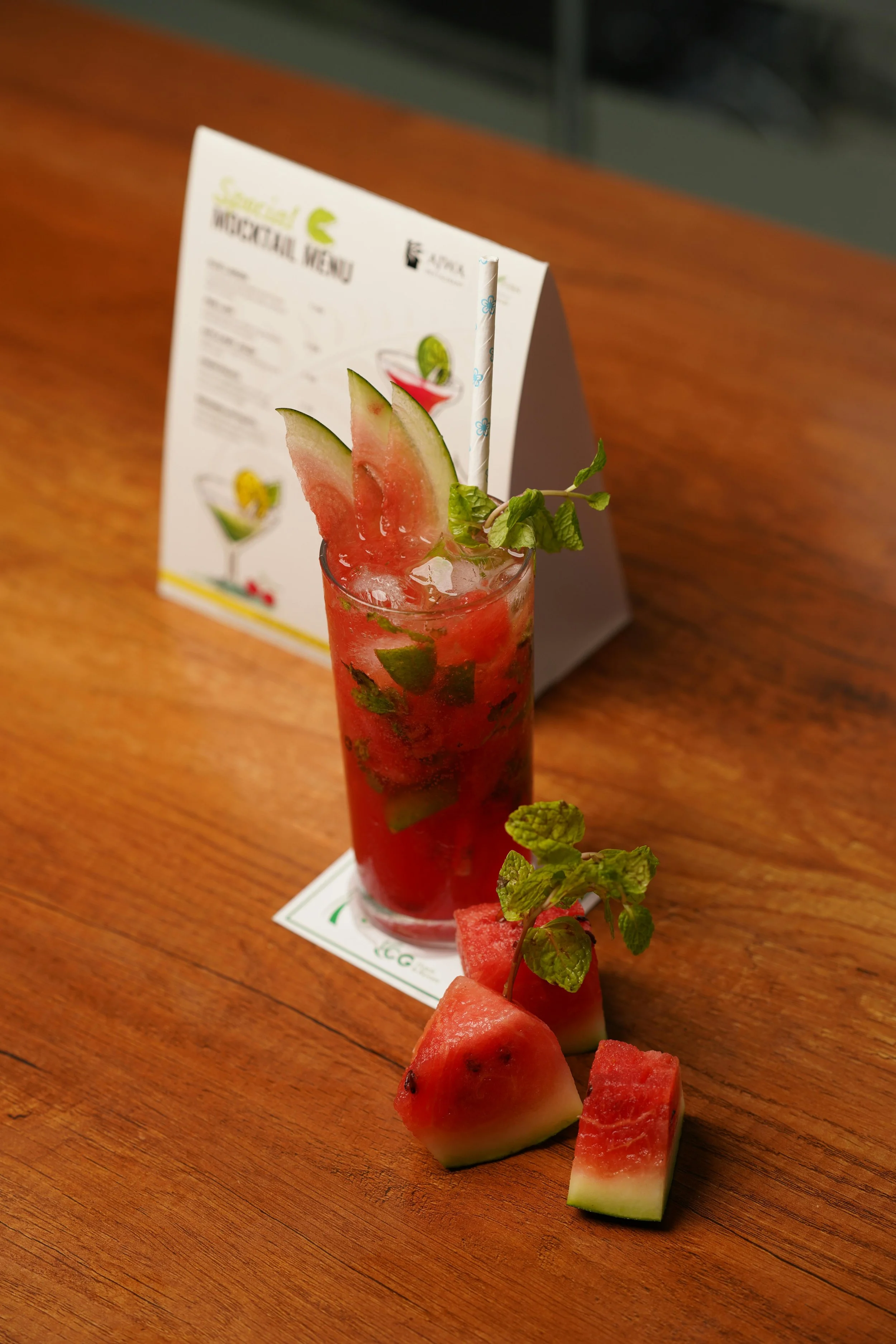
A cocktail menu with 40 options and one-word descriptions is telling a guest something about how the bar program is managed. A menu with 12 drinks, each described with the base spirit's origin, the technique, and the flavor profile, is telling a very different story. The second menu is not just easier to order from. It is evidence that someone in that building cares about the details. That detail usually shows up in the glass.
The menu is the most underbuilt asset in most restaurant operations. It is read by every guest, consulted at the highest-intent moment in the dining experience, and almost never engineered with the same discipline applied to food cost or labor. The operators who close that gap find that check average, perceived value, and repeat visit rates all move without a single change to what they are serving. HoCo works with operators to build menus that function as the revenue tools they already are, applying the behavioral science, language strategy, and structural decisions that turn 109 seconds of guest attention into the highest-return marketing investment in the building.
Sources
1. Restaurant Times — Restaurant Menu Engineering: Cornell University eye-tracking and descriptive language data
2. Toast — Menu Engineering and Menu Design: Cornell descriptive language 27% sales lift
3. Cornell University / Cornell Chronicle — Diners spend more when menus don't use dollar signs, International Journal of Hospitality Management
4. Restroworks — Restaurant Menu Statistics: Menu Price and CPI Data, 2025
5. OysterLink — Restaurant Consumer Trends 2026: 91% of diners noticed price increases
6. The Queen Zone — 12 Restaurant Menu Tricks: LSE/University of Sussex wine markup study, 2021
7. Datassential — Global Flavors 2025: 76% of consumers say menu descriptions matter for unfamiliar food