The rise of robotics in restaurants: what it solves, the risks, and where the line is.
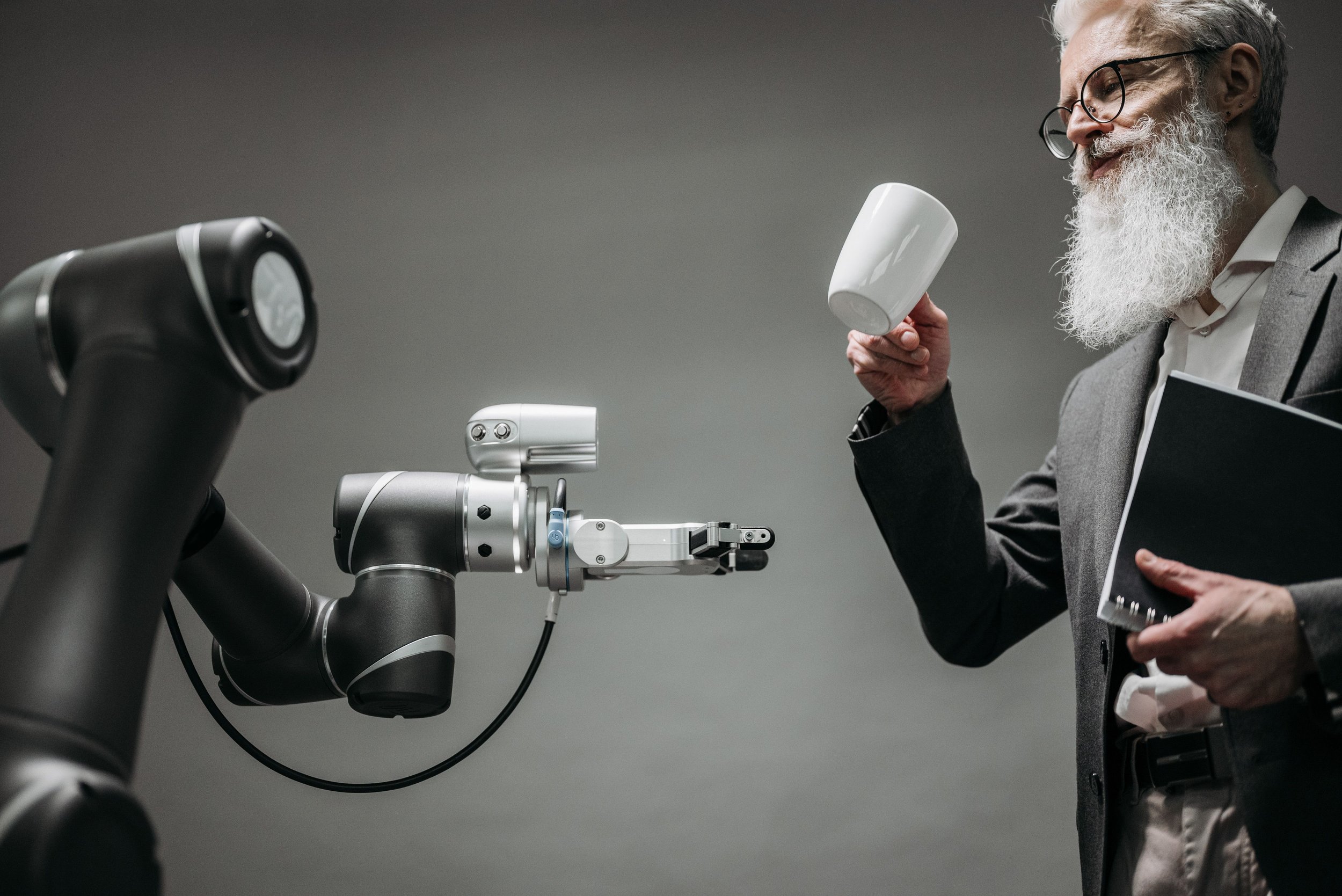
Automation in restaurants is not a future scenario. It is a present reality moving faster than most independent operators have prepared for. The robots washing dishes, flipping burgers, and running food across dining rooms are not novelties. They are operational decisions driven by data, and that data is worth understanding before the industry draws lines about what belongs in a hospitality business and what does not.
The scale of the shift is significant enough to take seriously. The global food automation market, including robotics, smart equipment, and control systems, was valued at $15.04 billion in 2024, with the restaurant technology segment projected to grow from $5.1 billion to $17.2 billion by 2032 at a 16.4% CAGR. 50% of U.S. restaurants are planning to adopt some form of automation technology within the next two to three years, according to 2025 Datassential research. That is not early adoption. That is a structural shift in how the industry thinks about labor, consistency, and cost.
The drivers are not mysterious. Rising labor costs, labor shortages, increasing demand for contactless dining, and the growing preference for operational consistency are all accelerating automation adoption simultaneously. An industry that runs on 3 to 5% margins and has averaged 75% annual staff turnover does not have the luxury of dismissing technology that addresses both problems. The operators deploying robotics are not doing it because they want to eliminate the human element of hospitality. Most of them are doing it because the human time they have is too valuable to spend on tasks a machine can perform with more precision and less fatigue.
The applications are broader than most people assume. Dishwashing robots, burger-flipping arms, automated fry stations, food delivery bots navigating dining rooms, and AI-driven prep systems handling repetitive cutting and portioning are all in active deployment across every segment from fast casual to fine dining. The global food automation market is projected to reach $20.4 billion by 2030, driven by advances in AI, robotics, and IoT integration. The technology is not waiting for the industry to decide how it feels about it. It is already on the line.
What this means for operators
Automation is a tool. What operators do with the time it frees is the actual strategic decision.
The operators deploying robotics successfully share a consistent characteristic: they have defined specifically which tasks they are automating and why, and they have a clear answer to what their human team does with the capacity that automation creates. The ones who have not done that work are either deploying robots as novelties, which produces short-term attention and long-term operational complexity, or avoiding automation entirely while absorbing labor costs their competitors are addressing. Neither position is strategic. Both are reactions.
The robot does not improve the restaurant. Redirecting human attention toward the work the robot cannot do is what improves the restaurant.
The use case taxonomy is worth understanding before making a deployment decision. Not all automation produces the same return, and not all of it fits all operation types.
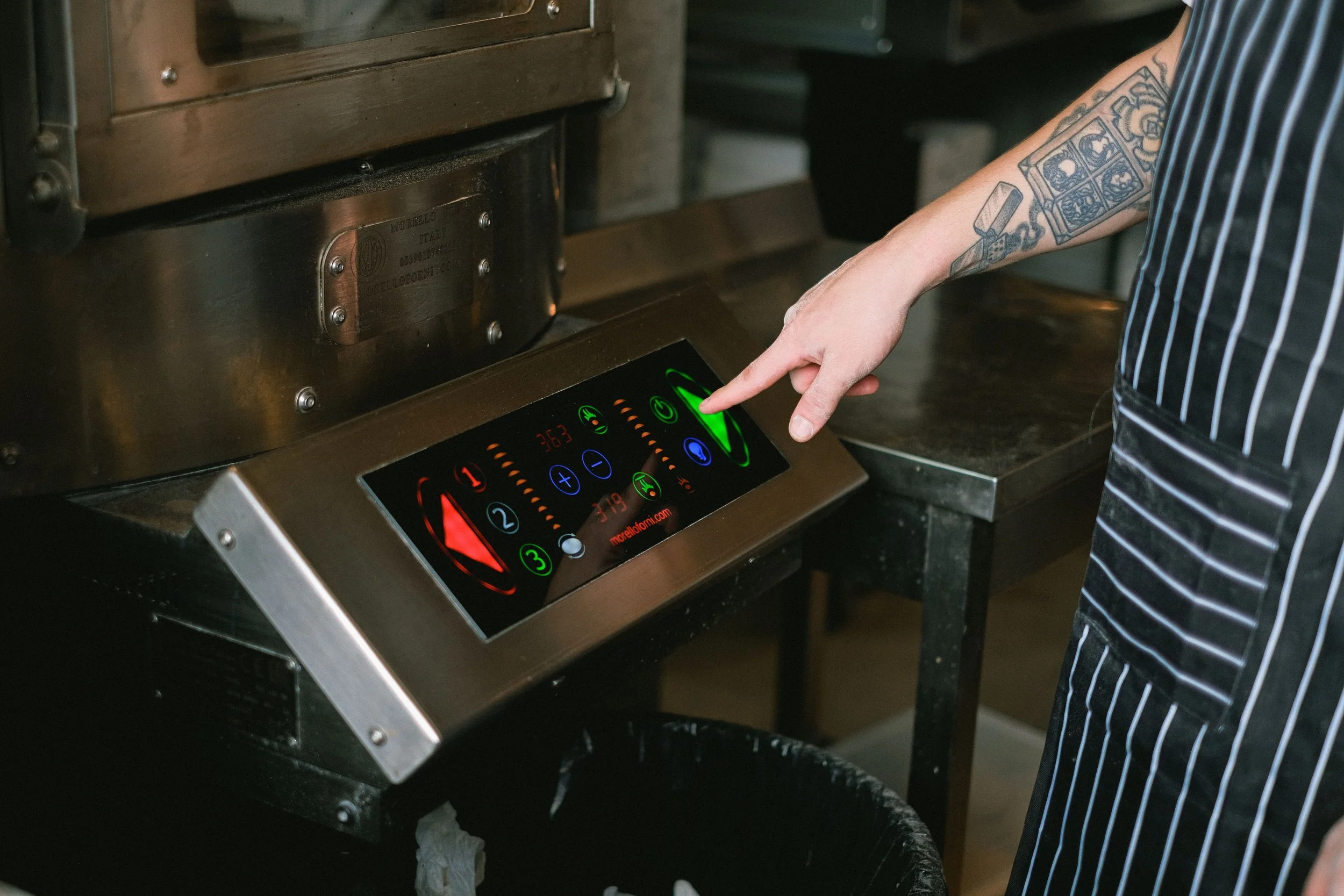
Dishwashing and sanitation
Highest ROI in the current robotics market. Consistent output, reduced water usage, labor reallocation to higher-value roles. Fits virtually every operation type.
Food preparation
Repetitive cutting, portioning, and assembly automation produces consistency gains and reduces prep labor cost. Best fit for high-volume, standardized menu operations.
Cooking automation
Fry stations, grill arms, and automated cooking systems reduce variance and eliminate burnout on repetitive high-heat tasks. Strong fit for QSR and fast casual.
Ordering and payment
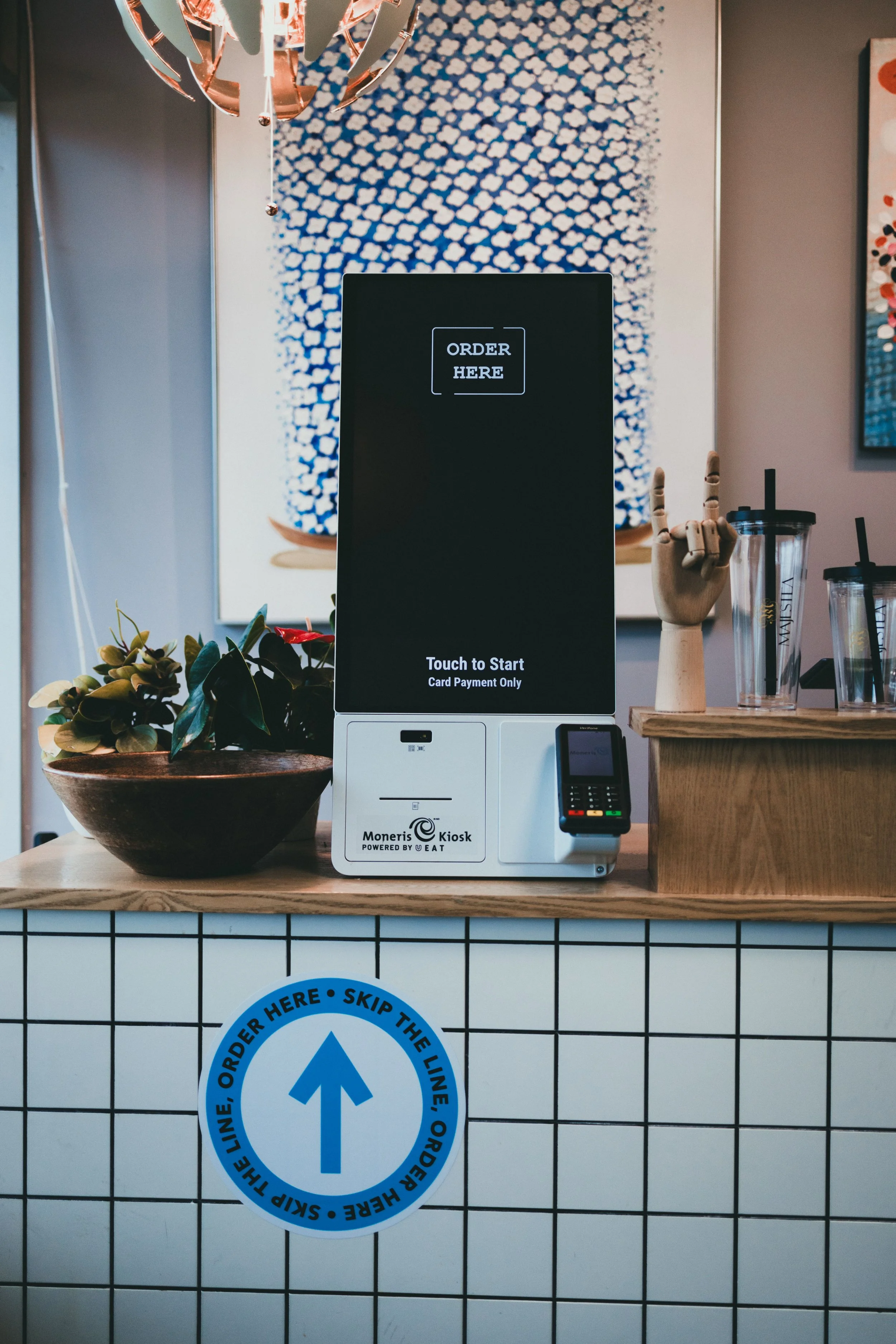
Kiosks, QR ordering, and tableside payment technology are the most adopted automation layer. 60% of diners now prefer ordering via mobile or digital interface.
Food delivery bots
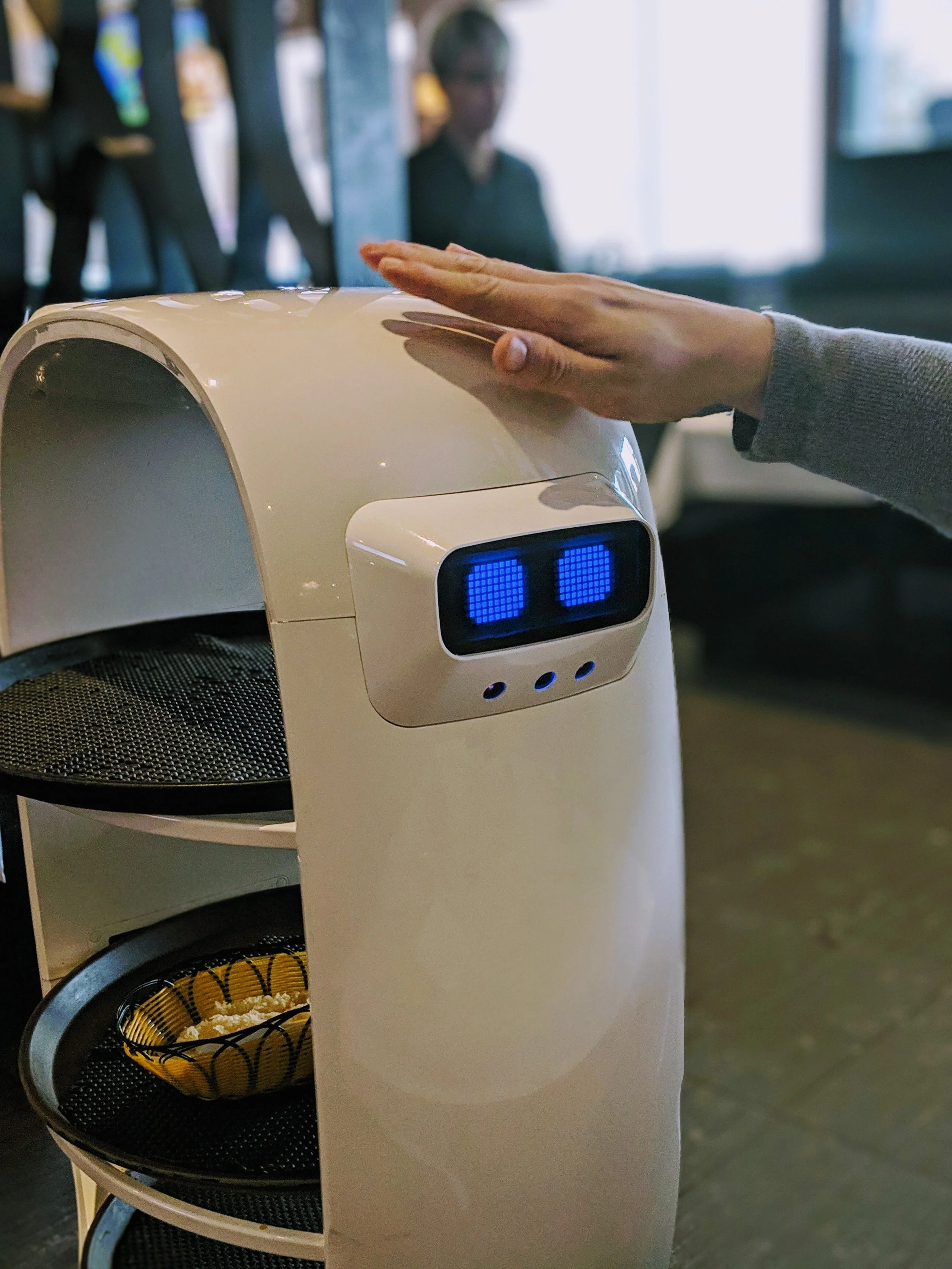
Dining room delivery robots reduce runner labor cost and increase table capacity. Guest response is mixed: strong novelty value, variable in experiential contexts.
Inventory and waste tracking
AI-driven inventory management reduces food waste and over-ordering. Quiet but high-impact: directly improves food cost percentage with minimal guest-facing change.
The financial case is real but not simple. Fast adoption scenarios project EBITDA margin growth from 12% in 2025 to 18 to 20% by 2035 for operations that successfully integrate automation, but those projections include the caveat that customer acceptance, integration complexity, and capital expenditure requirements are all variables that can invert the return. A robot that breaks down during a Saturday dinner service, requires a specialist to repair, and has no manual backup is not an efficiency gain. It is a liability. The operators building automation infrastructure well are building redundancy into the system before they deploy it.
What operators should do
Start automation with back-of-house tasks before front-of-house ones
The guest-facing automation decision is the highest-stakes one because it directly shapes the experience. Dishwashing robots, automated prep stations, and AI inventory systems do not require guest buy-in and do not risk the emotional warmth that defines hospitality. Starting there allows operators to build technical fluency, understand maintenance requirements, and realize financial returns before making the more complex decision about what the guest-facing experience should include.
Example: An operator who deploys a commercial dishwashing robot in year one, reallocates the labor hours that frees to an additional floor team member, and measures the impact on service quality and guest satisfaction before considering a front-of-house delivery bot, is building automation into the operation from the position of operational confidence rather than technological novelty.
Define what your human team does with every hour automation recovers
The operators who experience the most significant gains from automation are the ones who treat the freed labor capacity as a strategic resource rather than a cost reduction. Redirecting a line cook's time from repetitive prep tasks to menu development, guest interaction, or training produces a return that the automation cost calculation rarely captures. The ones who simply reduce headcount often discover that the service quality decline erodes the financial gain.
A bar that deploys an automated glass-washing system and uses the recovered bartender time to build a deeper guest relationship program, including personalized recommendations for regulars and a more attentive service cadence during peak hours, is using automation to elevate the human element rather than replace it. That is a fundamentally different deployment strategy from one that buys the same machine and reduces the bar team by one person.
Evaluate automation against your specific operation, not industry averages
The ROI of a delivery bot at a 300-seat casual dining chain is not the same ROI at a 40-seat independent restaurant. The consistency gain from an automated fry station in a QSR environment does not translate in the same way to a scratch kitchen where cook judgment is the product. Automation decisions require an honest assessment of volume, menu complexity, team capability, and guest expectations specific to the operation, not a general position on whether robots belong in restaurants.
A high-volume fast casual operation running 400 covers per lunch service is a strong candidate for automated prep and cooking technology because the menu is standardized, the volume justifies the capital cost, and consistency is the primary quality measure. A 30-seat chef-driven restaurant where every dish reflects the cook's judgment in the moment is not, and deploying the same technology there produces neither the financial return nor the quality benefit the case study operators reported.
Build guest communication into any front-of-house automation deployment
Guest acceptance of dining room robotics is not universal and is not automatic. Consumer acceptance of automation is growing but remains uneven across segments and demographics. Operators who deploy delivery bots or automated ordering systems without framing them as a deliberate hospitality choice, explaining what the robot does and what it allows the human team to focus on instead, risk the guest interpreting the technology as a cost-cutting measure at the expense of the service relationship. The narrative around the deployment matters as much as the deployment itself.
A restaurant that introduces a dining room delivery bot with a brief, specific explanation on the menu and a team briefed to speak to it naturally, explaining that the bot handles food delivery so the service team can focus entirely on the table experience, positions the technology as a service enhancement. One that simply places the robot on the floor without context produces a guest experience defined by confusion and reduced warmth rather than novelty and improved attention.
What this means for consumers
The robot running your food is not the threat. Mistaking efficiency for hospitality is.
The guest response to restaurant automation is more nuanced than the industry conversation about it. 60% of diners now prefer ordering via mobile apps over traditional methods, and 65% use QR code menus, which means guests have already opted into significant automation in their dining experience without necessarily framing it that way. The resistance to robotics tends to be more specific: not to the technology itself but to the feeling that the technology is replacing the relationship rather than supporting it.
The distinction is important because it points to something operators need to hear directly from the people they serve. A guest does not object to a dishwashing robot they never see. Many do not object to a delivery bot that brings their food efficiently while a human team member follows immediately behind to check on the table. What produces genuine resistance is the experience of interacting with a restaurant that has used technology to reduce the number of people paying attention to them. The automation that supports human attention is a service improvement. The automation that replaces it is a hospitality problem regardless of its operational efficiency.
Robot systems benefit high-volume outlets by sustaining continuous operation without fatigue, leading to fresher output and fewer service delays throughout busy hours. Guests in high-volume, quick-service environments are already experiencing the benefit of that consistency, whether they attribute it to automation or not. The meal that arrives at the same temperature, portioned correctly, within a consistent time window across 400 covers of a lunch service is a product of operational systems the guest benefits from without necessarily seeing. That is automation working correctly.
What consumers can do
Evaluate the experience, not the technology, when forming an opinion about automated restaurants
The presence of a robot in a restaurant is not by itself a signal of quality decline. The question worth asking is whether the human team is more or less attentive as a result of what the technology is handling. An operation where automation has freed staff to focus entirely on the guest relationship is delivering a better experience than one where a full human team is stretched thin across too many tasks. The robot is the least relevant variable in that comparison.
Noticing that a restaurant with a delivery bot also has a server who visits the table more frequently, knows the menu in greater depth, and has time to make a genuine recommendation rather than rushing to the next table produces a different assessment of the automation than assuming the technology reduced the quality of care. Evaluating what the human team does with the capacity the robot creates is the more accurate measure of whether the deployment serves the guest.
Give specific feedback when automation creates a service gap rather than filling a general complaint
When automation produces a worse experience, the most useful feedback is specific about what created the gap rather than general about the technology. A review that says "the delivery robot was confusing and no one explained what it was doing" gives an operator something to fix in their communication and training. One that says "too many robots, felt impersonal" gives them nothing actionable and misdiagnoses the problem as the technology rather than its deployment.
Noting in a review that the automated ordering kiosk was efficient but that no team member checked on the table after the food arrived, and that the absence of that interaction left the meal feeling transactional, gives the operator the specific information that the kiosk is not the problem — the service protocol around it is. That distinction is the difference between a note that improves the operation and one that confirms a bias the operator cannot act on.
Recognize when automation is improving the experience you are already having
The fastest and most consistent QSR experience, the order that arrives correct and hot without a long wait, the table that turns without a visible scramble, is almost always the product of automation the guest does not see. Recognizing that the operational systems behind a smooth experience include technology alongside the human team produces a more accurate picture of what good hospitality requires, and it reduces the reflexive resistance to technology that has already improved the dining experience in ways that went unnoticed.
The meal that arrives at the correct temperature every time, with no wait-time variance between visits, at a restaurant that runs a consistently high volume, is almost certainly benefiting from back-of-house automation the guest never encounters. The guest who attributes that consistency entirely to the chef's skill is not wrong about the skill. They are incomplete about the system that allows that skill to express itself consistently across 400 covers rather than just the first 40.
Support the operators using automation to invest in better human hospitality, not just lower costs
The difference between an operator who uses automation to reduce headcount and one who uses it to redirect human time toward deeper guest care is a distinction consumers can observe, name, and reward with loyalty. The operation that deploys technology in service of a better human experience is making a values-based investment worth recognizing. Return visits, specific reviews, and word-of-mouth that name the quality of the human interaction alongside the efficiency of the operation send a market signal about what good automation deployment looks like.
A restaurant where the automated systems handle the mechanical tasks and the human team is visibly present, engaged, and focused on the guest relationship is showing what a thoughtful deployment produces. The guest who returns specifically because of how the team made them feel, and who mentions that in a review, is validating an investment the operator made in human hospitality rather than in labor reduction. That distinction is worth naming when it is encountered.
Automation is a systems decision, not a technology trend. The operators building it into their operations successfully are the ones who have done the strategic work of understanding what they are automating, why, and what their human teams do with the capacity it creates. HoCo works with operators to build that strategic clarity, helping them make infrastructure decisions that improve the guest experience rather than simply reducing the cost of producing it.
Sources
1. Restroworks — Restaurant Automation Statistics 2025: $15.04B global food automation market; 60% of diners prefer mobile ordering
2. US Foods / Datassential — Restaurant Robots Are Here: 50% of U.S. restaurants planning automation adoption within 3 years; $5.1B to $17.2B QSR automation growth
3. Food On Demand / Data Horizzon Research — Forecasts Anticipate Transformative Decade for Fully Automated Restaurant Market: $1.9B market valuation 2024; key adoption drivers
4. GoSnappy / Lucintel — 10 Restaurant Automation Trends 2025: $20.4B market projection by 2030; 6.7% CAGR
5. Robert Ancill / Beehiiv — The Future of Restaurants — 10 Year Outlook: EBITDA margin projections under fast and base adoption scenarios
6. Foodhub for Business — How AI and Automation Are Reshaping Restaurant Operations in 2025: 23% CAGR for AI restaurant industry 2023–2030