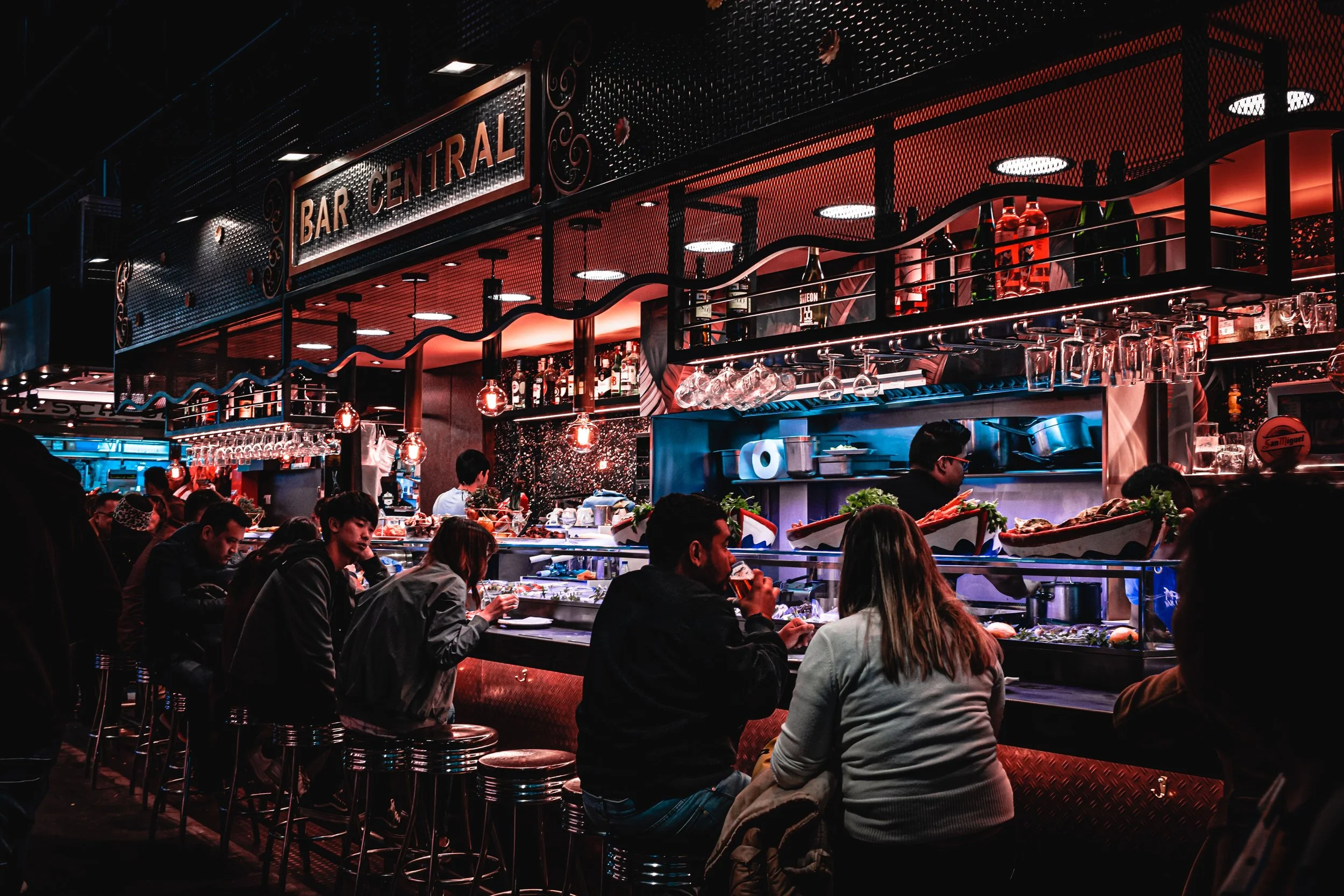
An empty stool tells you something is wrong. It does not tell you what. The operators who recover fastest are the ones who stop guessing, work out whether guests said no or never got the chance to say yes, and only then decide what to change.
Every operator knows the sound of a quiet Tuesday. Open stools, a team polishing glassware that is already clean, and one word drifting through pre-shift: slow. It feels like a verdict. It is really a symptom, and the same symptom can come from two completely different conditions. Low demand means guests know the bar exists and chose something else. Low visibility means they never got the chance to choose it at all. From behind the bar, the two look identical. Their fixes point in opposite directions, which makes misdiagnosis the most expensive mistake a quiet bar can make.
The demand side deserves honesty first, because the headwinds are real. Gallup's 2025 survey found that 54% of U.S. adults say they drink alcohol, a record low, down from 63% in 2023. Among adults under 35, the share fell from 59% to 50% over the same stretch. That is a genuine shift in the pool of people who go out for a drink, and any operator who ignores it is guessing. But a market-wide dip cannot explain why two bars on the same street, serving the same shrinking pool, have completely different Tuesdays. What it does is raise the stakes of being chosen. When fewer nights out make it onto the calendar, it is reasonable to expect guests to spend them on places they already know or can quickly verify, so a bar that is hard to find or hard to trust is competing for a smaller prize with a bigger handicap.
Meanwhile, the road from curiosity to a seat at your bar runs through more places than ever. SOCi's 2025 Consumer Behavior Index found that 83% of consumers still use traditional search engines, while 73% use social media and 58% use navigation apps to decide where to go. Toast's guest discovery research adds the human layer: 38% of diners say word of mouth is how they find new places, and 30% simply walk or drive past. Then comes the proof step. BrightLocal's 2026 review survey found that 97% of consumers read reviews for local businesses, and 71% do it on Google. A guest can hear about you, find you on a map, and read two reviews in the time it takes to finish a drink somewhere else. Your bar can fall short at any link in that chain, and from the inside the result is the same empty Tuesday.

What this means for operators
Before you change the menu, run the diagnosis.
The instinct when a bar goes quiet is to change what guests see once they walk in: a new menu, a happy hour, a promotion. Those are demand tools, and they work on guests who have already found you. If the real issue is that guests are not finding you, those moves spend time and margin improving an experience almost nobody is reaching. A visibility problem often hides a bar that is already good, and it deserves a very different kind of attention.
The two conditions leave different fingerprints, and neither needs expensive software to read. It takes someone willing to look at first-time versus returning guests and ask which door is the leaky one. That single question redirects an entire quarter of effort.
Low demand asks guests to want you more. Low visibility asks you to be easier to choose. Treat one like the other, and you fix neither.
Toast's discovery data makes the strategic point plainly: the venues most likely to break through are the ones that show up consistently across several channels, including a strong Google Maps presence, an active social feed, and solid reviews. Visibility is not a single post or a single platform. It is the cumulative proof a guest finds in the few minutes before they decide, and it is built, not hoped for.
What operators should do
Split your guest data into first visits and return visits before changing anything
The two numbers tell opposite stories. Strong returns with a thin trickle of newcomers point to visibility. Plenty of newcomers with weak returns point to demand and experience. Without the split, every quiet night looks like the same problem, and the response is a guess. Pull one month of reservation and POS data and sort guests into first-time and returning. A bar that finds most of its regulars come back but only a handful of new names appear each week has just learned it needs discoverability, not a new cocktail list.
Search for your own bar the way a stranger would
With guests spreading across search engines, social platforms, and navigation apps, the first impression is whatever those channels happen to show. Most operators have never seen their bar through that lens, which means the guest's first look is the one thing nobody on the team has checked. Spend twenty minutes on a slow Tuesday searching for the best cocktail bar near your neighborhood on Google Maps and Instagram. Note where you appear, which photos lead, whether the hours are right, and what the top reviews say. The gaps you find are the to-do list.
Make the proof easy to find and recent
With 97% of consumers reading reviews and 71% doing it on Google, the proof step decides many visits before a guest ever sees the room. Fresh photos, correct hours, a current menu, and answered reviews tell a stranger that the place is alive and cared for. Take a bar whose profile still lists last year's hours and a menu photo from before the remodel. Updating the hours, adding a dozen current photos, and answering the last ten reviews can move a guest from "maybe" to "let's go" without a single change to what is poured.
Give your best guests a reason to bring someone
Word of mouth is the number one discovery path in Toast's research at 38%, and for Gen Z, TikTok is the top discovery channel at 38%. Either way, a regular's recommendation is the most efficient visibility a bar can earn, and regulars share more readily when the bar hands them something specific to share. Imagine a monthly guest-bartender night that regulars know about weeks in advance. It hands every one of them a ready-made invitation for the group chat, and it gives short-form video something genuinely new to capture.
Treat the street as a channel, not a given
Thirty percent of diners say they find new places by walking or driving past, which makes the entrance, the signage, and the sidewalk presence part of the marketing plan. A bar that is easy to walk past is quietly turning away guests who were already close. Consider a bar with a stairwell entrance and a modest sign. A lit A-frame with the night's special, a menu visible at the door, and an open sign that matches the real hours turn an easy-to-miss entrance into an invitation for everyone passing by.
What this means for consumers
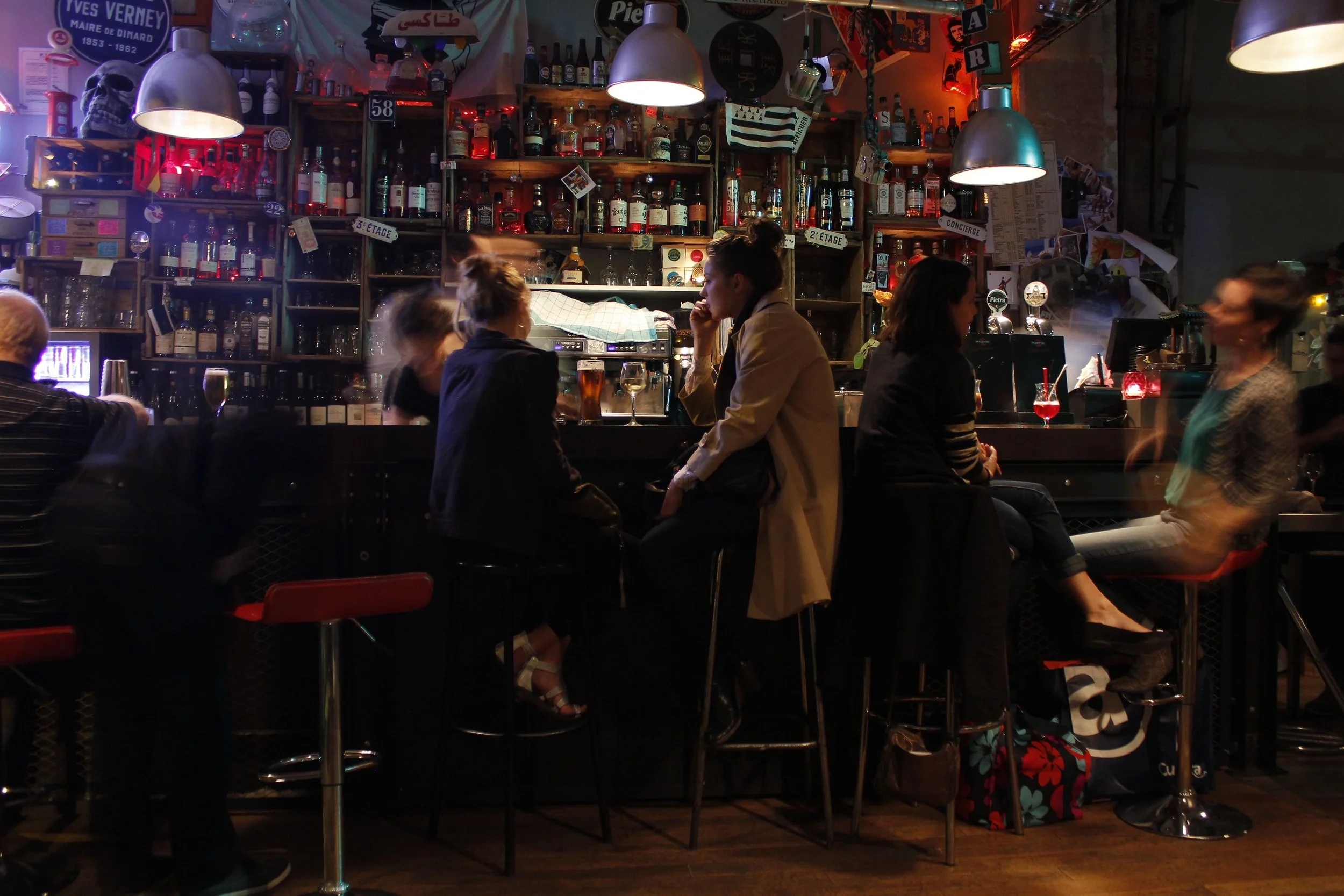
The best bar in your neighborhood may be one you have never been shown.
From the guest's side, the picture is quieter but just as real. When a bar is easy to find and easy to verify, it gets considered. When it is not, guests choose from a smaller pool and tend to default to places they already know, which means great bars can stay hidden while average ones stay busy simply because they are more visible. That is not a failure of taste. It is a failure of information, and guests are well placed to help fix it.
Guests are also the largest discovery channel there is. With 38% of diners saying word of mouth is how they find new places, the group text, the casual recommendation, and the "you have to try this place" at a dinner table do more discovery work than most advertising. Reviews matter just as much: when 97% of consumers read local reviews, a recent, specific one is among the most useful things a guest can add to a place they like.
None of this asks guests to go out more. It asks them to be a little more curious about the places already open and a little more generous about passing along what they find. A bar that gets chosen once and chosen again is the product of many small acts of visibility from guests who decided a good place should not stay a secret.
What consumers can do
Look beyond the first few search results
Top results tend to reward the places that have already invested in being seen, which is not always the same as the places doing the best work. A little scrolling surfaces the bars still waiting for their audience. Next time you are choosing where to meet friends, scroll past the first few map results and open a bar with fewer reviews but specific, recent ones from regulars. That is often where the places not yet getting their due are hiding.
Send the invitation, not just the compliment
Because word of mouth is the top way people find new places, a recommendation only works when it reaches someone as a plan. "That bar was great" fades by the next morning. A name, a day, and a time become an evening. Instead of telling a friend a bar is great, drop its name in the group chat with a day and a time. A named plan converts in a way a general rave rarely does.
Leave the review while the details are fresh
Nearly every guest reads reviews before choosing, so a recent and specific one does double duty. It helps the next stranger decide, and it tells the bar what is working. Writing "the barrel-aged Negroni and the bartender who explained it" within a day or two of the visit gives the next reader a concrete reason to say yes.
Try the quiet bar on a quiet night
A quiet room is not a verdict on the work behind the bar. Visiting when there is space gives guests the fullest version of what a place can do, and it supports the operators who most need to be discovered. Pick a Tuesday for the bar you have been curious about. With room at the rail, the bartender has time to talk, and the first visit becomes a real introduction rather than a rushed one.
Slow is a symptom. The operators who recover are the ones who diagnose before they prescribe, and then build the right system for the problem they actually have. For some bars that means strengthening the experience. For many it means building the visibility that puts a good bar in front of the guests already looking for one. HoCo works with operators to run that diagnosis and build the discovery systems behind it, so a good bar gets chosen on purpose rather than by chance.
Sources
1. Axios / Gallup: A Record Share of Americans Are Giving Booze the Boot (54% drink in 2025; under-35 drinking fell from 59% to 50%)
2. BevNET / Gallup: Gallup Poll: Record Low 54% of US Adults Drink Alcoholic Beverages (63% in 2023, 58% in 2024)
3. Modern Restaurant Management / SOCi: Are You Invisible? Restaurant Marketing Faces a Multi-Platform Reckoning (2025 Consumer Behavior Index)
4. Duck Hub / Toast: Restaurant Marketing Statistics (Toast guest discovery survey: word of mouth 38%, walking or driving past 30%, Gen Z TikTok 38%)
5. Enrich Labs / BrightLocal: Restaurant Marketing: Complete Guide 2026 (BrightLocal Local Consumer Review Survey 2026: 97% read reviews, 71% on Google)
6. Toast: How Guests Discover New Restaurants