
Good restaurants lose good people every year, and the reflex is to blame the market, the paycheck, or the person. The data points somewhere more useful: most of what pushes people out was built, which means most of it can be rebuilt.
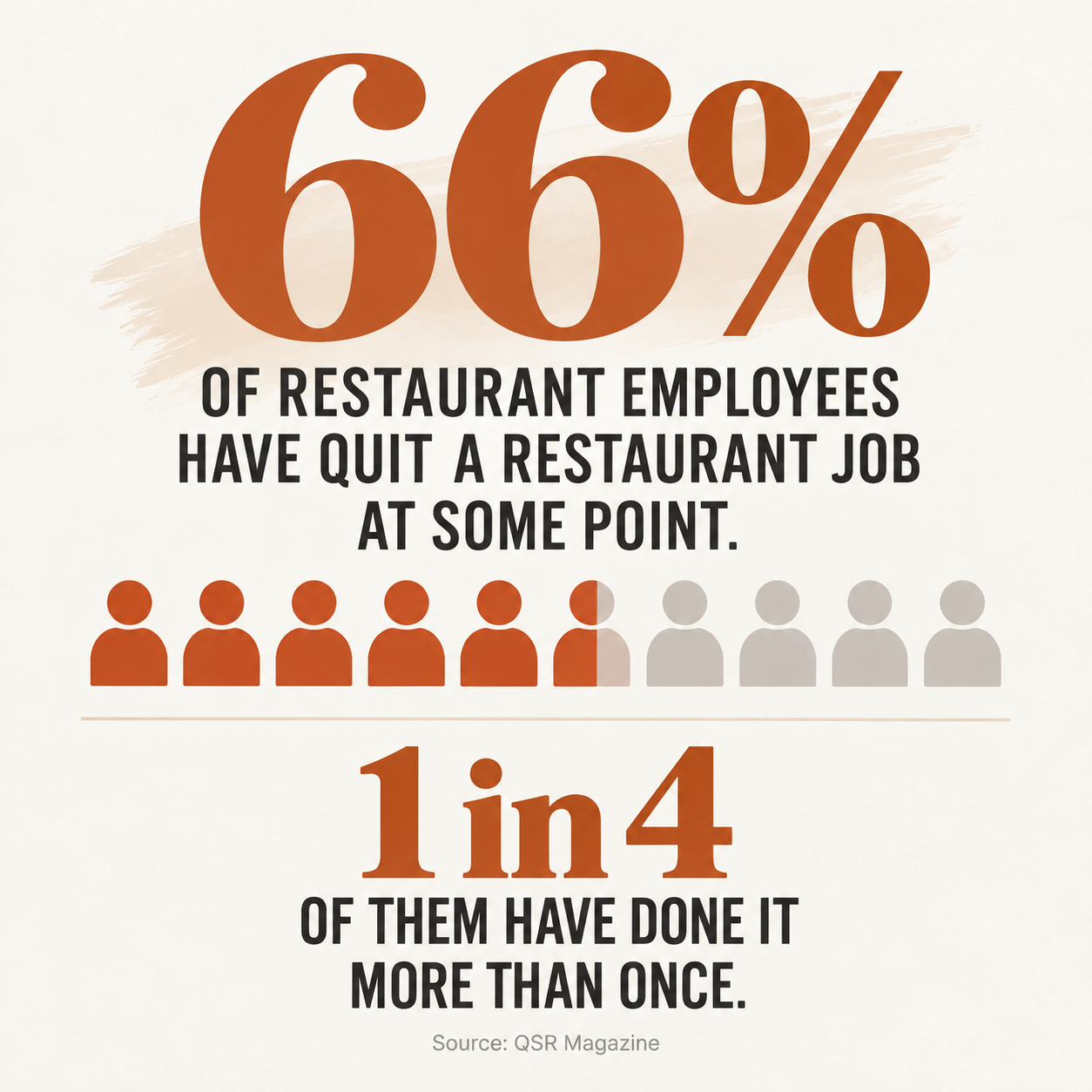
Every operator knows the moment. The server who knew every regular by name, trained the new hires without being asked, and made a packed Saturday look easy asks for a quiet word. The food is good. The pay is fair. The owner is decent. The resignation arrives anyway, and the first instinct is to treat it as personal, or as a pay gap, or as the market. The data suggests it is usually none of those. In a survey of more than 1,500 active restaurant employees, 7shifts found that 66% had quit a restaurant job at some point, and a quarter of them had done it more than once. Leaving is common enough to be patterned, and patterns are exactly what systems exist to change.
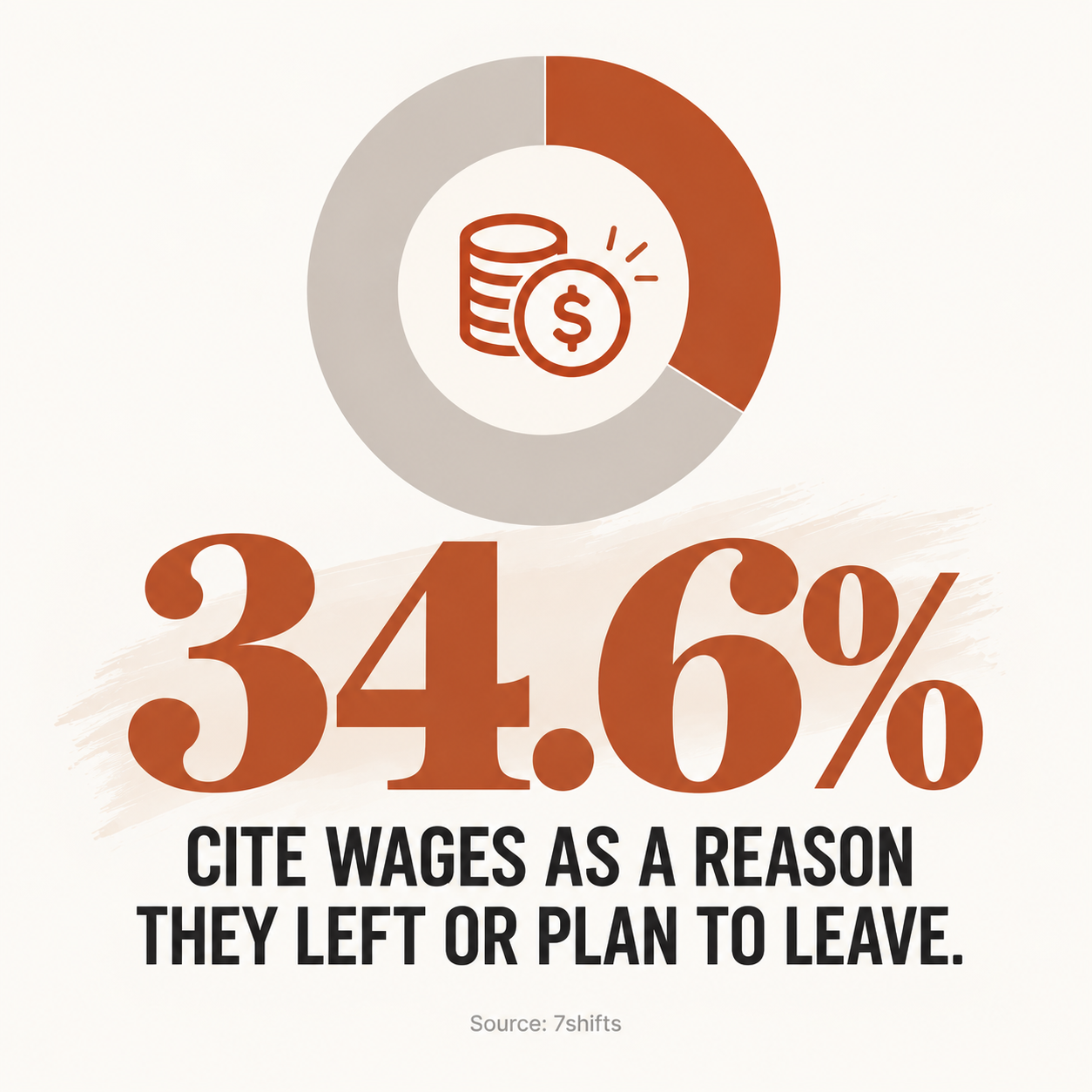
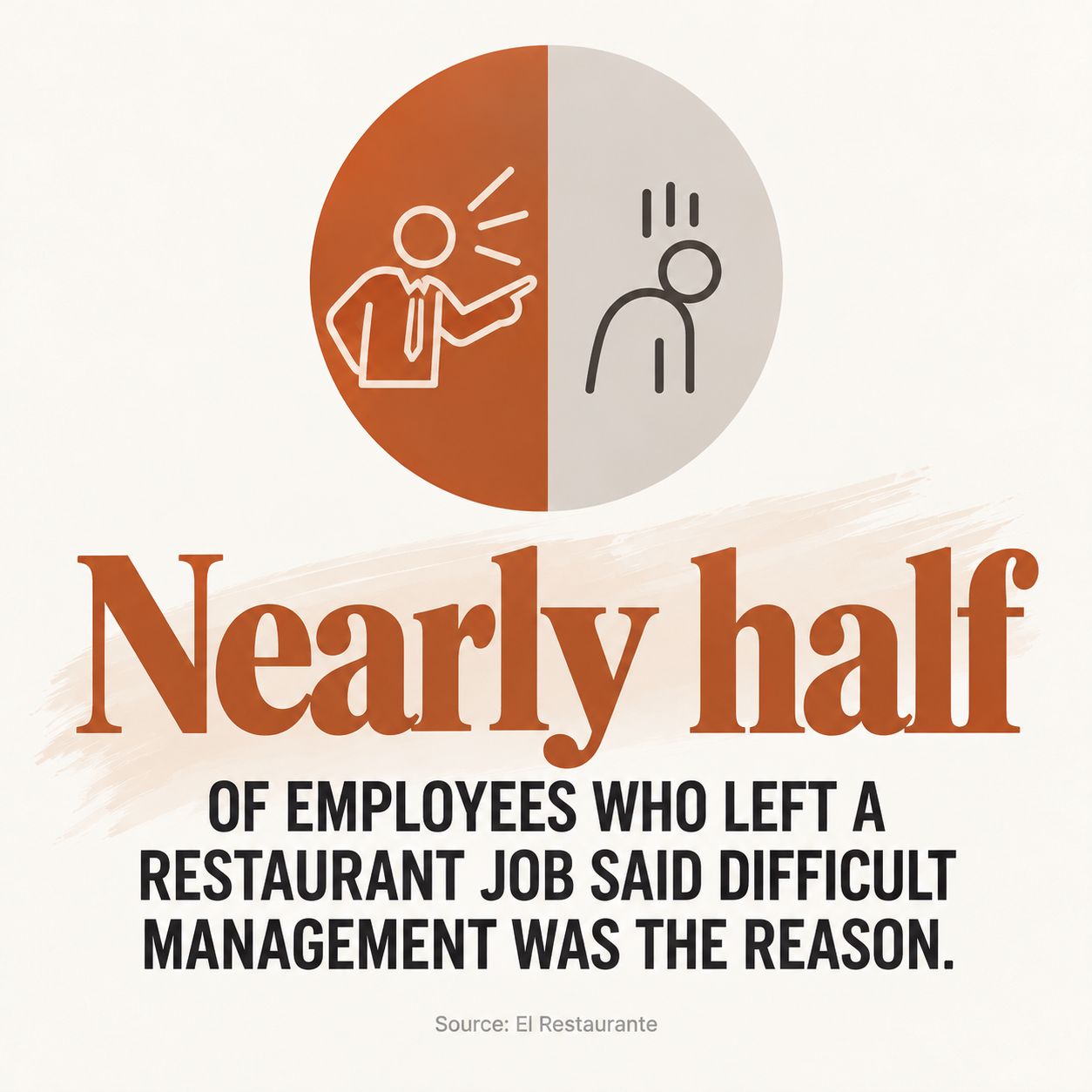
Pay deserves its place in the conversation, and the numbers give it one: 34.6% of restaurant employees cite wages as a reason they left a job or plan to. That is roughly one in three. The rest of the picture sits in places a raise does not reach. Nearly half of employees who had left a restaurant job said difficult management was the reason. In the same research, 24% listed a lack of opportunity as a reason for leaving, and about 75% said a clear career path is important or extremely important. Scheduling carries equal weight, with 56% naming flexible scheduling among the biggest contributors to how satisfied they feel at work. Management, growth, and scheduling are not personality traits of a restaurant. They are systems, and a restaurant either built them on purpose or inherited whatever happened to form.
That is the good news hiding inside the problem. Good restaurants often run on the founder's energy and the best employees' goodwill, which works beautifully until the strongest people, who also have the most options, decide the goodwill is carrying more than the structure is. And because 60.8% of employees rank getting along with their team among the top reasons they are satisfied at work, every departure also takes something from the people who stay. Retention compounds in both directions. The operators who treat it as infrastructure rather than luck are the ones whose teams get stronger each year instead of rebuilding each spring.
What this means for operators
Retention is not a perk. It is the output of four systems you either built or did not.
Those four systems are how managers lead, how people grow, how schedules are built, and how good work gets noticed. In restaurants that lose good people, all four tend to be left to individual managers and good intentions. One shift lead is a natural coach, and a team stays for years. Another is a brilliant operator who was never taught to give feedback, and the same team turns over twice. Same restaurant, same pay, different outcome, because the system was a person instead of a standard.
Recognition is the clearest example of a system most good restaurants never write down. Over half of restaurant employees say more recognition from management would increase their engagement, and a third say the form they want it in is a promotion. Both findings point the same way. People are not asking for a party. They are asking for evidence that someone is tracking what they contribute and that it leads somewhere. Restaurants that answer with a rhythm rather than a mood keep the people who would otherwise start quietly looking.
A restaurant keeps its people the same way it keeps its quality: on purpose, in writing, and on a schedule.
Disciplined operators treat retention the way they treat food cost. It is measured on a calendar, owned by a named person, and reviewed before it becomes a problem. They do not wait for a resignation to learn something. They ask early, they write the path down, and they build the schedule as if the people on it have lives, because they do.

What operators should do
Teach managers how to lead, not only how to run a shift
Difficult management is the reason nearly half of former restaurant employees give for leaving, which makes manager skill the largest single retention lever in the building. The people promoted for excellence at the work are rarely trained for the part of the job that decides whether others stay: delivering a correction without humiliation, running a fair pre-shift, and saying thank you in a way that is specific. Picture a bar lead who is the best technician on the team and has never been shown how to coach. Give that person a one-page standard for corrections, a monthly one-on-one format, and two role-played difficult conversations, and the energy that ran the bar well starts running the team well.
Write down the next step, even when it is a small one
With 24% leaving over a lack of opportunity and about 75% calling a clear path important, the gap is rarely ambition. It is visibility. People stay for a future they can see, and the path does not need to resemble a corporate ladder. A named next role and a plain description of what it requires is enough to turn a job into a direction. Take a four-step bar path of barback, bartender, lead, and program manager. Putting what each step requires on a single page, then checking each person's progress every quarter, gives the barback a reason to learn the whole menu this month rather than someday.
Build the schedule for stability and for team chemistry
Flexible scheduling is a top satisfaction factor for 56%, and 60.8% rank their team at the top, so a schedule that is predictable and keeps strong pairings together protects two of the biggest reasons people stay at once. It is also the one retention tool every employee experiences every single week. Look at what changes when schedules publish two weeks ahead, swaps move through one simple approval path, and the two cooks who run Friday expo like a single organism stay paired. There are fewer frantic text threads on Thursday night, fewer surprise call-outs, and a line that keeps improving because the same hands keep working it.
Make recognition a scheduled part of service
When over half want more recognition and a third want it as a promotion, the answer is a habit rather than an impulse. Recognition works when it is specific, regular, and connected to what comes next: naming what someone did, tying it to an outcome, and linking it to growth. Add ninety seconds to pre-shift for one named contribution from the night before, such as the server who caught a mislabeled allergen or the cook who cut ticket times on a slammed Saturday. Across a season, those moments accumulate into a record of who is ready for more, which is exactly the list a promotion conversation needs.
Ask why people stay, and track the answer like a number
With two-thirds of restaurant employees having quit a job before, the useful question is not only why people leave but what they would need to still be here in a year. Stay conversations surface small, fixable frictions weeks before they turn into notice, and they signal that speaking up leads somewhere. Say each key team member gets ten minutes a quarter built around three questions: what is working, what is getting in the way, and what would you want to be doing a year from now. The answers become a short list of fixes, and the fixes become the proof that the conversation was worth having.
What this means for consumers
You are part of the retention system. Most guests just never get told.
Guests rarely see staffing decisions, but they feel the results constantly. The place where the bartender remembers what you ordered last spring and the floor moves like one team is almost always a place that has kept its people. The place that feels slightly different every visit, with new faces, half-learned menus, and a tentative energy, is often one that keeps rebuilding. That feeling of consistency, or the lack of it, is the guest's version of the retention data.
Guests also hold something operators cannot schedule: recognition from outside the building. When over half of restaurant employees say more recognition would increase their engagement, a specific compliment from a guest, passed along to a manager, lands in a way an internal note cannot. It is proof that the work reached a real person, and that kind of evidence tends to travel, into shift assignments, into promotion conversations, and into the decision to stay another year.
None of this requires guests to change how they dine. It asks them to notice what is working and say so where operators and future guests are listening. Choosing the restaurants where people stay, and telling those restaurants why, helps direct dining dollars toward businesses that keep experienced teams, which is the version of hospitality worth returning to.
What consumers can do
Name the person in the review
Names turn a review from a rating into recognition. A manager reading it knows exactly who to thank, an owner reading it knows exactly who to keep, and future guests learn that real professionals stand behind the experience. Writing "Dani walked our table through the wine list without a single scripted line" gives that restaurant something it can act on at the next pre-shift. A four-star review with no names gives it a number.
Say it to the manager while the evening is still happening
Praise carries extra weight because it arrives from outside the system, and a manager who hears it in the moment can respond that same week with a better section, a development conversation, or a visible thank you. Thirty seconds with the floor manager at the end of dinner, something like "our server was the best part of the night, she made it feel easy," can shape a schedule and a conversation before the next service begins.
Treat longevity as a signal worth rewarding
Teams that stay build knowledge that cannot be hired in a week: menu depth, regulars' preferences, the rhythm of the room. Returning to places where that knowledge shows is how guests reinforce hospitality built on experience. Asking a bartender how long they have been behind the bar is both a compliment and a data point. If the answer is six years, the drink in your hand reflects six years of refinement, and a return visit helps fund the next six.
Ask about the path, not just the plate
With about 75% of restaurant employees saying a clear growth path matters, a curious guest can help make hospitality careers visible. Interest in someone's craft reinforces that this is a profession, not a pause. Ask a server where they trained, or what they would like to run one day, and the exchange shifts from order-taking to something closer to mentorship. People who feel seen as professionals tend to stay professionals.
Good people leave good restaurants for reasons that were built, which means they can be built differently. Management standards, growth paths, scheduling discipline, and recognition rhythms are not HR extras. They are infrastructure, and infrastructure is what keeps a team compounding instead of restarting. HoCo works with operators to design that infrastructure around how their restaurant actually runs, so the people who create the guest experience stay long enough to make it great.
Sources
1. QSR Magazine / 7shifts: As Labor Tightens, Restaurants Race to Recruit and Retain a Changing Generation
2. El Restaurante / 7shifts: What Do Restaurant Employees Want? New Report Sheds Light on Management, Growth, and Retention
3. 7shifts: 8 Reasons Why Restaurant Workers Quit (And How to Retain Them)
4. Blink: 7 Restaurant Employee Retention Strategies for High-Turnover Teams
5. 7shifts: Restaurant Turnover Rate: Why It Happens and How to Reduce It