The Hidden Labor of Hospitality Marketing
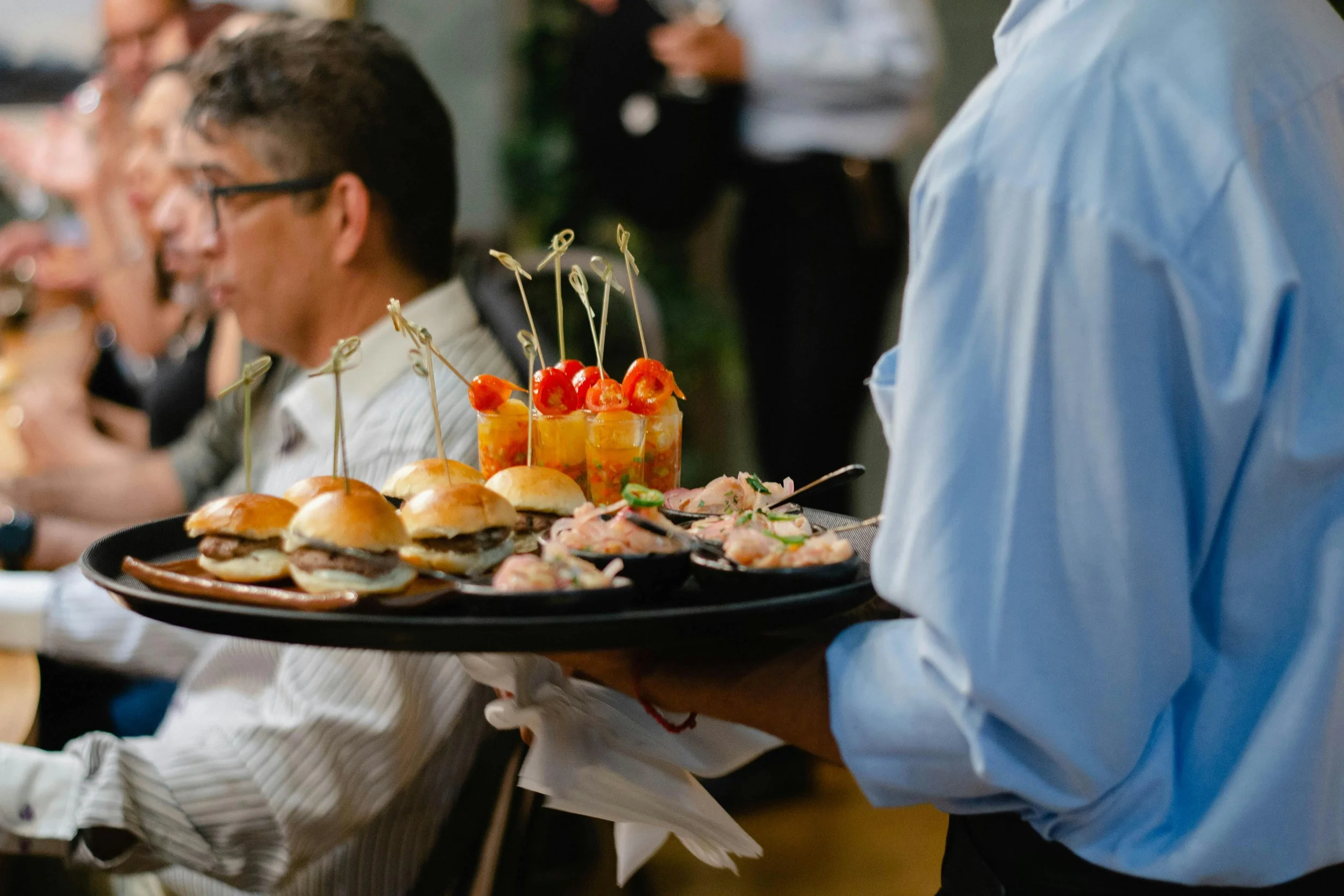
Running a restaurant has never been simple. What has changed is how many additional roles operators now carry, and how few of them ever appear in a job description.
Marketing became a second job inside hospitality. Most operators never agreed to that.
A generation ago, restaurant owners focused on operations: sourcing ingredients, managing service, training staff, and maintaining quality. Marketing existed, but it rarely demanded daily attention. Today, visibility requires continuous output. Operators manage social media accounts, respond to online reviews, promote events, produce video content, and monitor digital analytics. None of these responsibilities appear on a typical job description, yet together they consume hours that were never budgeted for them.
The scale of the industry makes this pressure unavoidable. U.S. restaurant sales are projected to reach $1.55 trillion in 2026, and the competitive density that growth creates means operators can no longer rely on location and reputation alone. When guests evaluate dozens of options digitally before deciding where to dine, visibility is not a marketing advantage. It is a survival requirement. The problem is not that marketing matters. The problem is that most operators are carrying it alone, without structure, and on top of everything else.
The numbers behind that pressure are significant. 88% of operators reported higher labor costs and 79% reported higher food costs in the past year. At the same time, 61% experienced traffic declines between 2023 and 2024, with more than a third reporting that their restaurant was not profitable during that period. When margins shrink and guest traffic becomes unpredictable, the instinctive response is to promote more: more posts, more events, more campaigns. Without a system behind that effort, the workload expands faster than any single operator can sustain. Marketing stops being a strategy and becomes a reaction. Roughly 70% of U.S. restaurants are single-unit businesses, and 90% employ fewer than 50 people. These are not organizations with dedicated marketing departments. They are small teams in which the same person manages inventory and Instagram.
What this means for operators
Marketing fatigue is not a personal failure. It is a structural one.
Most operators experiencing marketing burnout are not working too little. They are working without a system, which means every piece of content, every promotion, every campaign starts from zero. The workload never compounds into anything. It just repeats. The exhaustion is real, but its source is architectural, not motivational, and that distinction matters because one of those problems is fixable.
The pattern that creates burnout is consistent across operations of all sizes: marketing is handled reactively, visibility expectations never pause, and operators attempt to manage every platform themselves. Digital platforms reward consistency, which means gaps in output reduce reach, which creates pressure to maintain activity even during the busiest service periods. The operator is not failing at marketing. They are running marketing without the infrastructure that makes it sustainable.
What disciplined operators do differently is treat visibility as an operational function, not a creative one. Content production, promotion cycles, and guest communication follow predictable schedules. Marketing decisions are evaluated through guest behavior, including repeat visits, reservation trends, and community engagement, not vanity metrics. The work does not disappear, but it stops being reactive, and that shift changes everything about how it feels to carry it.
What operators should do
Audit where your marketing time actually goes before changing anything. Most operators overestimate how much time they spend on strategy and underestimate how much they spend on execution that could be batched or systematized. Without a clear picture of where time is going, any solution is a guess.
Let’s say you track one week of marketing activity and you discover that 80% of the time goes to reactive tasks, responding to comments, creating last-minute posts, chasing content for a slow Tuesday, rather than planned output. That data becomes the brief for what to systematize first.
Build a monthly content calendar that follows your operational rhythm, not your traffic anxiety.
Content created under pressure is inconsistent in quality and inconsistent in frequency. A calendar that maps to your actual service schedule, events, and seasonal patterns produces more output with less effort because the decisions are made in advance.
Designating one afternoon per week as a content production window, capturing footage, writing captions, and scheduling posts in one session, eliminates the daily scramble. The same volume of content gets produced in a fraction of the time because context-switching is removed.
Choose two platforms and operate them with discipline rather than spreading thin across five.
Presence on every platform without the capacity to maintain any of them signals inconsistency to potential guests. A well-maintained presence on two channels outperforms a neglected presence across six, both in reach and in perception.
An independent restaurant that commits fully to Instagram and Google, maintaining updated hours, responding to every review, and posting consistently, builds stronger discoverability than a competitor posting sporadically across five platforms with no consistent cadence on any of them.
Measure marketing performance through behavior, not engagement.
Likes and impressions measure attention. Reservations, repeat visits, and new guest acquisition measure impact. Operators who optimize for behavior rather than engagement make better decisions about where to invest their limited marketing time.
A post that generates 200 likes but no reservations and a post that generates 40 likes but drives 12 covers tell completely different stories. Without tracking the downstream behavior, the operator keeps optimizing for the wrong signal and producing content that feels successful but drives nothing.
Separate the creative work from the distribution work and assign each to a consistent time block.
Creating content and posting content are two different cognitive tasks. Mixing them creates friction and mental fatigue. Operators who batch creation separately from distribution produce more consistent output and experience significantly less resistance to the process.
Filming all content for the week on Sunday before service and scheduling all posts on Monday morning eliminates the daily decision of what to post and when. The creative energy is concentrated in one window, and the rest of the week runs on execution rather than invention.
What this means for consumers
The restaurant you love is probably running its marketing alone.
When a guest notices that a restaurant's social media went quiet for three weeks, or that an event was not posted until the day before, or that the menu on Google is six months out of date, the instinct is to read it as disorganization. Sometimes it is. More often, it is the visible symptom of an operator carrying too much without enough structure to carry it well.
The average independent restaurant does not have a marketing team. It has an owner, a manager, and a team that is already fully deployed running service. The content, the promotions, the review responses, the digital updates, those tasks fall to whoever has a moment between the lunch rush and the dinner prep. Guests experience the output of that reality every time they search for a place to eat. The restaurants that show up consistently are not necessarily the best operators in the room. They are the ones who have figured out how to manage visibility alongside everything else.
This matters because the choices consumers make based on digital presence directly shape which businesses survive. A restaurant with exceptional food and an inconsistent Instagram is competing against a mediocre one with a polished feed. The guest who never discovers the first place is not making a bad choice. They are making a reasonable choice based on incomplete information. Consumer attention and operator visibility are more connected than most people realize.
What consumers can do
Go beyond the feed when deciding where to eat. Social media presence is increasingly a measure of marketing capacity, not hospitality quality. A sparse Instagram does not mean a mediocre kitchen. Operators with less infrastructure often produce better experiences than those with better content strategies. A neighborhood restaurant with infrequent posts but consistent five-star reviews over three years is almost always a stronger bet than one with a polished feed and middling feedback. The reviews reflect the experience. The feed reflects the marketing budget.
Leave specific, useful reviews rather than star ratings alone. A detailed review gives the operator actionable feedback and gives future guests the information they need to make a confident decision. Both outcomes benefit the broader dining ecosystem. A review that describes the specific dish, the pacing of service, and the atmosphere on a Tuesday evening is infinitely more useful than a four-star rating with no context. Operators read these. The specific ones change behavior.
Engage with content from independent operators when you see it. Platform algorithms reward engagement. When a small restaurant posts and receives no interaction, that post reaches fewer people next time. A comment, a share, or a save from a regular guest has a measurable impact on an operator who cannot afford paid promotion on every piece of content. Guests who shares a restaurant's event post to their own story is effectively doing the work of a marketing team member for thirty seconds. For an independent operator with no paid reach budget, that organic amplification is often the difference between a full room and an empty one on a Thursday night.
Ask the places you love how you can support them. Most operators will not ask directly because it feels like an admission of struggle. But most guests, if they knew that following an account or signing up for a mailing list moved a real needle, would do it without hesitation. The gap between what operators need and what guests offer is often just a conversation that never happened. Example: A regular who asks their favorite bar owner what the best way to spread the word is will almost always get a specific answer. Follow us here. Share this event. Leave a review on Google. Those actions take two minutes and produce results that a solo operator cannot replicate alone.